


Community & Stakeholder Engagement
We design with, not for communities. Our holistic approach to engagement integrates stakeholder* input throughout the process – from establishing relationships to navigating differences and reaching consensus.
*We acknowledge that the history and usage of the word “stakeholder” may not feel safe, inclusive or appropriate in all communities where we are privileged to work. As this is still the language that describes this service in many formal agreements with our clients, we include it here with the disclaimer that we can and do regularly adapt language to fit both contexts and preferences.
Recent Projects
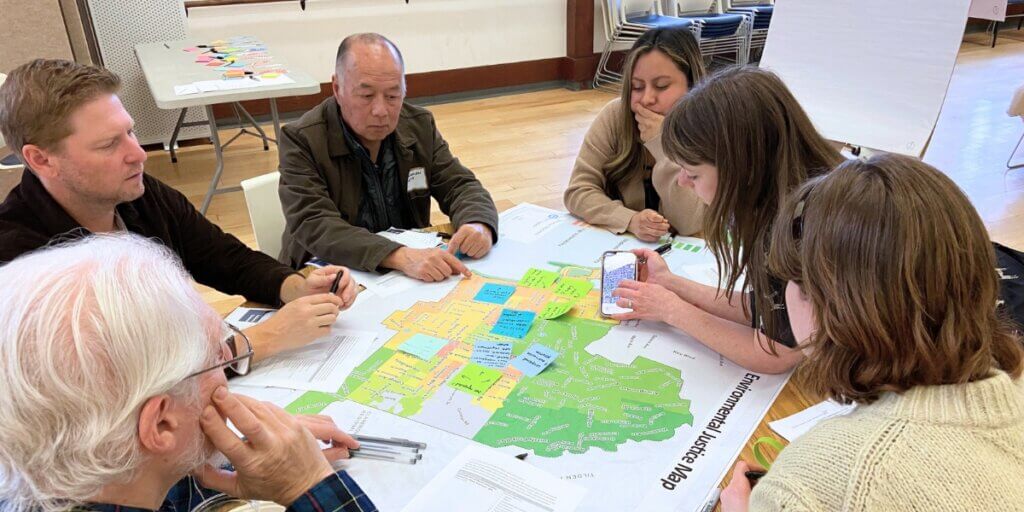
City of Berkeley – Environmental Justice & Safety Planning
Engaging community to create a ‘Prepared, Safe, and Healthy Berkeley for All’
![Six people are seated around a table. In the middle is a large map of the City of Berkeley with some areas in green, yellow, or orange. On top of the map are several post-its. A facilitator is leaning in showing people something on their phone as part of the discussion.]()
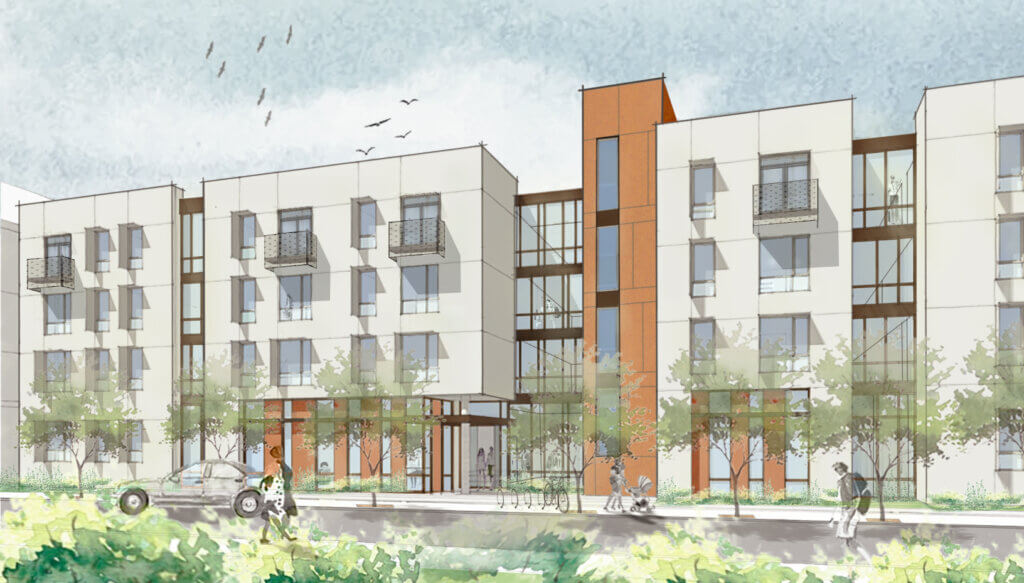
Accessible Design Workshop for Hawthorn Senior Apartments
Co-creating accessible affordable housing with seniors, unhoused communities and people with disabilities.
![Digital rendering of the Hawthorn Senior Apartments]()
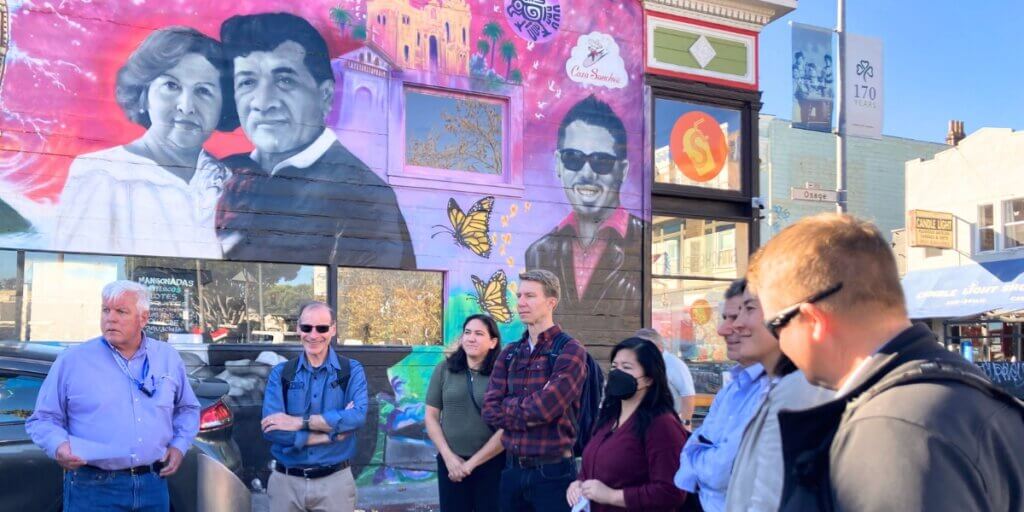
SF ORCP Concrete Building Safety Program – Stakeholder Engagement
Co-creating equitable recommendations for seismic safety with stakeholders in San Francisco
![Technical experts from ATC led stakeholders, including members of the CBSP Working Group and the City, on a tour of concrete buildings in the Mission.]()
City of Alameda Strategic Plan
A unifying vision and concrete plan for the City of Alameda
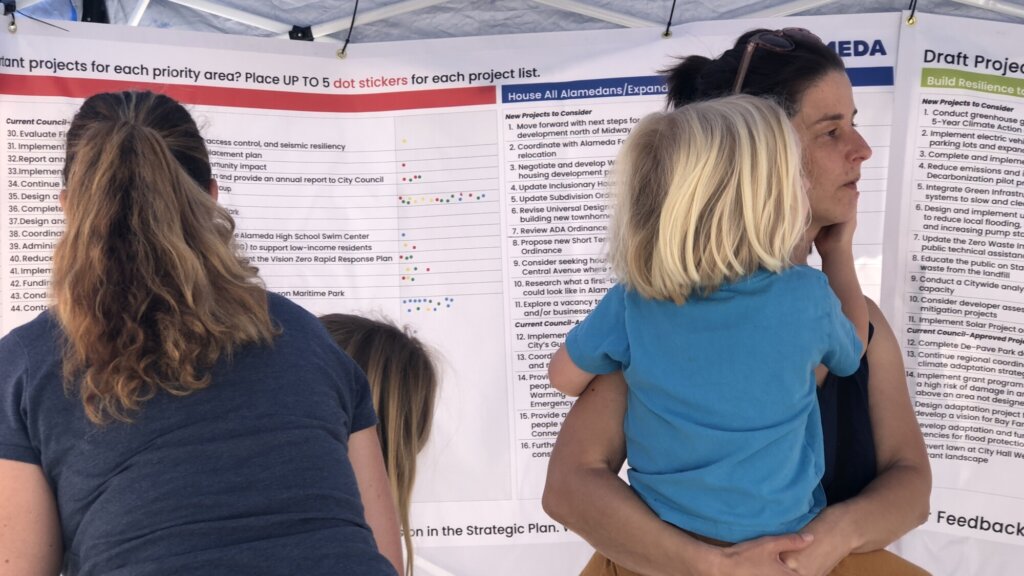
![Two adults and two children are looking at and in front of two three large pieces of paper. They are in a large foldable tent or shade structure at the Alameda farmer's market. The pieces of paper are hung up on three sides of the tent. The paper has potential details and things to vote on that they'd like to see in the plan. They are allowed to place dots next to the statements they like.]()
Santa Cruz Housing Element
Expanding affordable housing through inclusive and equity-centered engagement
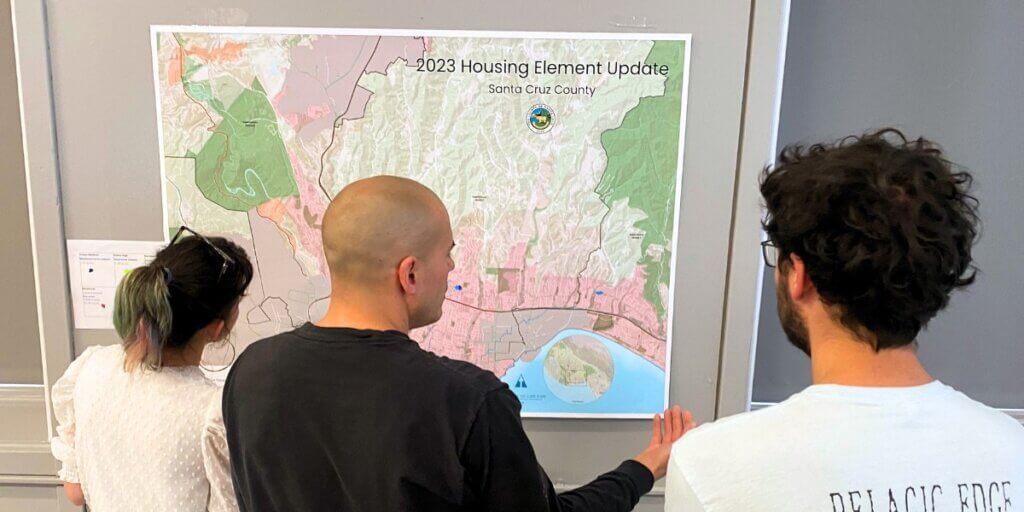
![From behind, three attendees are gathered around a map of Santa Cruz County in discussion.]()
Process
Engagement Design
We start every project by understanding who we need to engage. At this stage, we consider the different perspectives needed to make informed, people-centered decisions. Does a project require engagement with different community groups throughout the region? Does it require engagement with stakeholder groups such as working groups, departments, or other organizations?
Community is not a monolith, so we take our time to consider who may be impacted by the outcome of this project. To help us map out different perspectives, we often use our Stakeholder Identification tool to consider how people and groups relate to a challenge. We work closely with our clients to identify and prioritize who to engage.
We then customize engagement strategies to ensure they are relevant to local needs. Whenever possible, we ask people how they want to be engaged and develop strategies that align. This is one of the first steps in relationship and trust building. Our goal is to create meaningful and accessible opportunities for people to participate.
Finally, we draft messaging and identify outreach channels to promote engagement opportunities. We customize our outreach strategies to ensure we reach those who have historically been left out of decision-making processes.
Meaningful Engagement Opportunities
We meet people where they are – both literally (via pop-up workshop and online engagements) and emotionally (by being present with whatever they are experiencing). As participants share their time and insights, we regularly examine what value we are offering in return. We find opportunities to offer compensation or other resources that make it possible for more people to participate, such as covering transit costs or childcare.
We design all our sessions to be inclusive and accessible. This may include meeting community members in spaces that are comfortable and familiar to them, and making warm connections through local community leaders. When relevant, we hire local interpreters and/or facilitators, provide translated materials, and arrange accessible meeting accommodations.
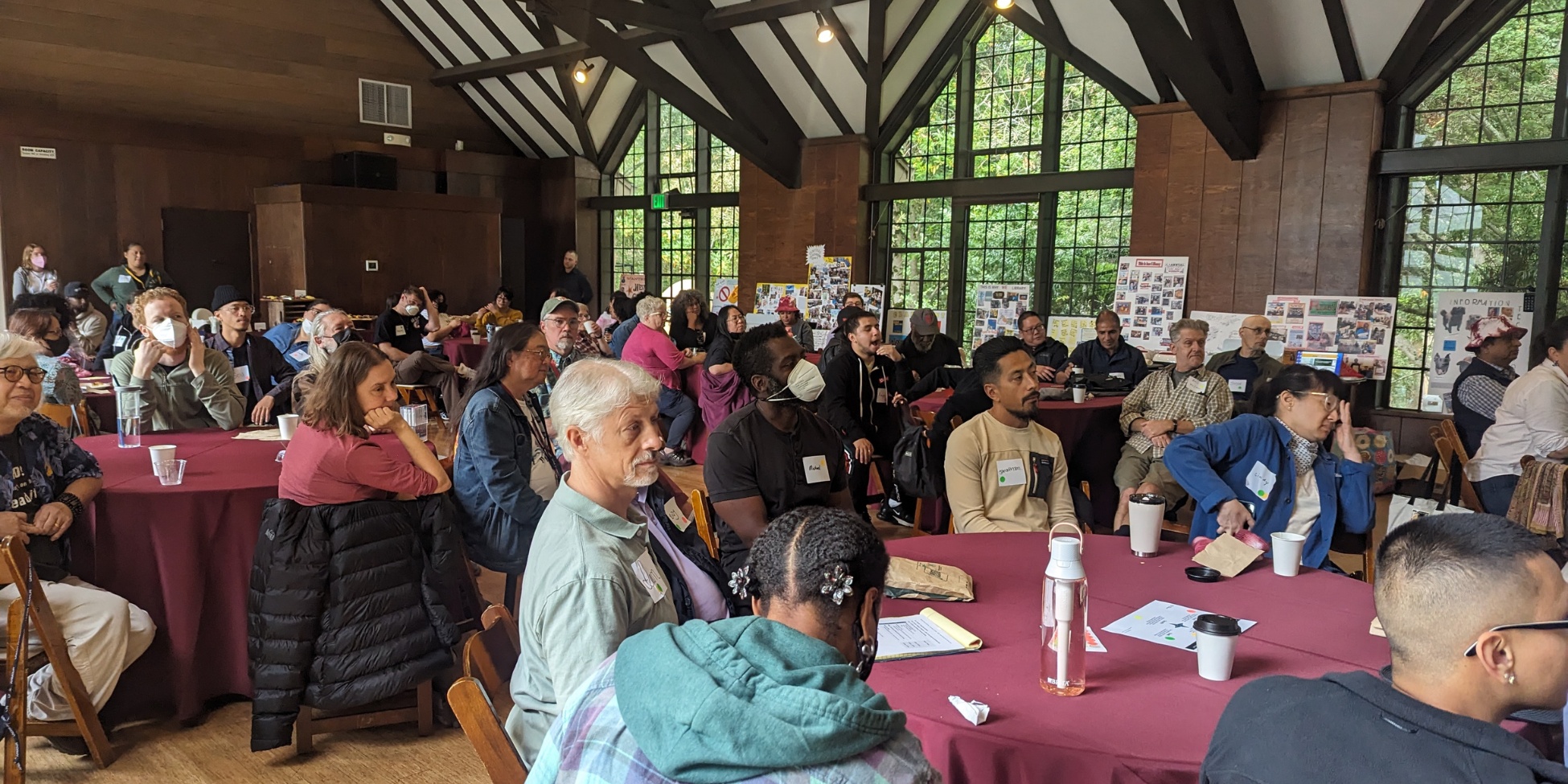
Our engagements are about relationships, not transactional interactions. We lean into co-design principles to make sure we bring people into the decision-making process. Our engagements are also outcomes-focused. Well-intentioned listening sessions can fall short of meeting community needs. To maintain trust, we create actionable feedback loops to bring people along from discovery through development.
We conduct a thorough debrief with clients and partners at a project’s end. This ensures goals were met, and that those who were engaged see themselves in the end product. We share our tools and resources with our partners to equip them to continue leading the work and equitable engagement activities.
Sometimes engagement is about meeting people where they are. Other times it’s about bringing people to the places most impacted by a challenge.

Products
Engagement is fundamental to all our service areas; focusing both internally and externally. We’ve successfully applied our engagement approach to local and regional planning, strategic planning, policy development, service design, evaluation, and participatory research efforts across disciplines.
|
|
Messaging that makes complex topics clear and accessible to diverse audiences |
 |
Outreach campaigns that use a range of channels to generate interest and participation |
|
Online feedback opportunities that reach broad groups and generate useful data |
|
Workshops that surface practical insights and move groups toward consensus |
|
Actionable insights that improve/shape programs, policies, and services |