


Case study: Climate Careers Program Evaluation with BayREN
Improving home energy efficiency while growing a green workforce
CivicMakers, in partnership with Grounded Research, evaluated Rising Sun’s Climate Careers program, which trains underserved youth to deliver no-cost energy and water assessments and installation of efficiency measures to low- and moderate-income Bay Area households. Through data review, field observation, and interviews, we made recommendations to improve resident and youth outcomes.
Photo Credit: Rising Sun

Listen
Climate Careers pays youth ages 15–24, mostly from low-income backgrounds, to conduct no-cost home energy and water audits for Bay Area residents, installing efficiency devices like LED bulbs and low-flow showerheads. Beyond technical skills, the program builds participants’ professional and life skills. After the summer internship, youth transition into paid externships with local green economy organizations, with some receiving job offers.
CivicMakers conducted qualitative research, including interviews, observations, and surveys, to evaluate Rising Sun’s Climate Careers program from the perspectives of Green House Call recipients, youth Energy Specialists, and program staff.
We observed three outreach events and shadowed Energy Specialists during Green House Calls in Alameda and Marin Counties, using contextual inquiry to assess how training translates to practice. We also held virtual interviews with staff, current participants, and alumni, and partnered with Grounded Research on youth and customer surveys. This mixed-methods approach allowed us to compare intended outcomes with energy usage data and lived experience.

Learn
Our research confirmed that the program successfully delivers value to both youth and residents: immediate energy and water savings to low-income households and meaningful workforce development opportunities for underserved youth. We also identified some opportunities for improvement.
Youth Energy Specialists valued the real work experience, reporting growth in communication, teamwork, and professionalism, and many said the program sparked interest in environmental careers. Energy Specialists were consistently well-trained and professional. Key challenges included repetitive programming for returning participants, unpredictable partner rotations, logistical issues, and unclear career pathways to green jobs. Our recommendations included clarifying green career pathways, addressing parking and transportation challenges, tailoring alumni workshops by age and experience, and reinforcing the program’s environmental purpose and impact.
Residents receiving services valued the energy efficiency upgrades and information provided by friendly, professional youth. When assessing what could be improved, we found that some households misunderstood the program’s scope (expecting major repairs or extensive retrofits), residents didn’t always understand the benefit of the installations, and some forms and materials were confusing, duplicative or lacked translated versions. Our recommendations included clearer expectation-setting, more consistent benefits framing, and improved forms and translated materials.

Make
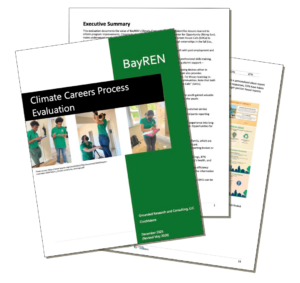
CivicMakers delivered three memos documenting findings and recommendations for program outreach, the overall youth experience, and the Green House Calls component of the program. These were designed for Rising Sun’s implementation team to integrate into time sensitive program decisions before the complete report, which integrated the quantitative data, was finalized by Grounded Research. The final report can be found here.
“Bay Area Regional Energy Network (BayREN) was thrilled to work with CivicMakers, in partnership with Grounded Research and Consulting, on this evaluation and report. They did a thorough job, coordinating a lot of on-the-ground research, and produced a well-rounded report that is informing improvements on both the youth workforce development side and the residential energy efficiency side.”
Jane Elias Director, Energy; Bay Area Regional Energy Network (BayREN)