

Case study: Environmental Justice & Safety Planning with the City of Berkeley
Engaging community to create a ‘Prepared, Safe, and Healthy Berkeley for All’
CivicMakers supported the City of Berkeley with a planning effort to ensure that all Berkeley residents—especially those most affected by environmental and climate-related challenges—live in a safe, healthy, and resilient community. Building on its longstanding climate leadership, the City wanted to update its Safety Element and create a new Environmental Justice Element for its General Plan. Our team, in close collaboration with local partners and an equity advisor, designed engagement activities to incorporate community input into the creation of the plans.
This project was funded by the Governor’s Office of Land Use and Climate Innovation (LCI) through their Adaptation Planning Grant Program (APGP). Read the case study published on LCI’s Adaptation Clearinghouse for an overview of the technical details of the project.

Listen
In partnership with the City’s Planning and Development Department, Rincon, Equity First, and the Ecology Center, CivicMakers co-developed a robust Equitable Community Engagement Strategy based in racial justice and trauma-informed principles, and grounded in cultural humility. Our objectives were to build community power and increase equity in the planning process. The plan also emphasized language access, ADA considerations, and multiple ways to participate (in-person and online), ensuring feedback would reflect the diversity of Berkeley’s lived experience.
To support the creation of the Environmental Justice and Safety/Disaster Preparedness plans, our team conducted community workshops and surveys, and collaborated with the Ecology Center, a local nonprofit, which led a parallel effort to engage frontline communities. Equity First served as an advisor, across the project, to ensure equitable design of each engagement.
CivicMakers led two community workshops and two online engagements aimed at bringing the broader public into the planning process, and coordinated with Ecology Center, who led the facilitation of a Community Advisory Committee (CAC). From the beginning, we sought the input of the CAC on our approach to broader community outreach and engagement, which helped strengthen the program. The CAC, who were compensated for their time, also helped to conduct outreach to frontline communities to spread awareness about the project and bring more people into the process.
Over the course of the project, the Community Advisory Committee was involved in crafting the language of the Elements, which CivicMakers in turn took to the community at large for feedback. With the support of Equity First, we took great pains to ensure that the engagement program was truly accessible and inclusive. Our outreach and engagement materials were crafted at a fifth-grade reading level, free of jargon, and translated into four languages. Workshops were all hosted at community centers and existing community events, and surveys used respectful language to collect optional demographic information. Feedback collected via each engagement was used to strengthen subsequent engagements.
Learn
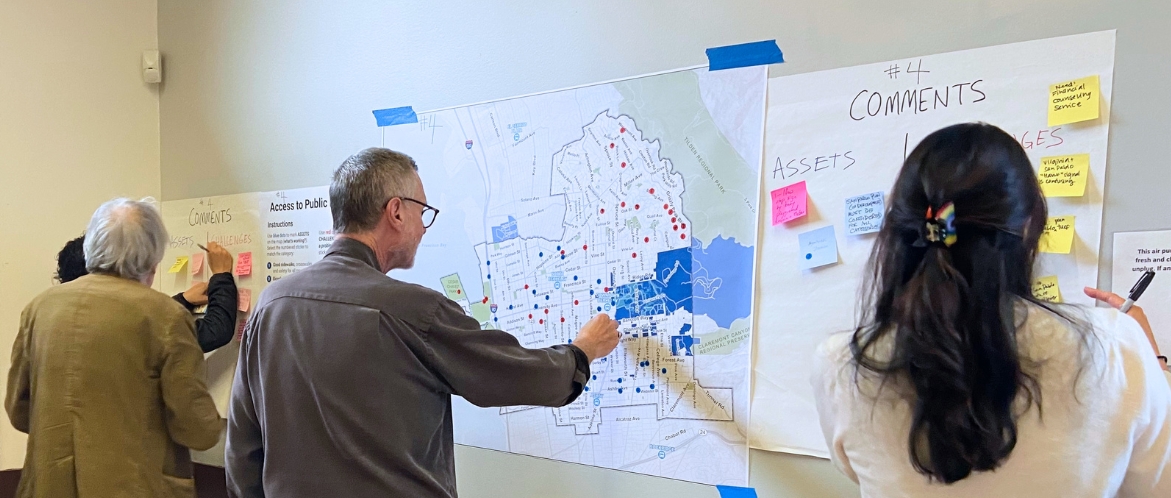
The first phase of community engagement invited community members to learn about the project and share their experiences of environmental justice and community environmental health and safety issues through a community workshop and an online survey. The workshop included a succinct presentation, mapping exercises, and group discussions. Mapping exercises invited participants to identify both assets and challenges related to air quality, housing, fresh food access, public facilities, and physical activity. Group discussions encouraged participants to reflect on what they had learned from their fellow community members about environmental justice, climate vulnerability, and environmental health.
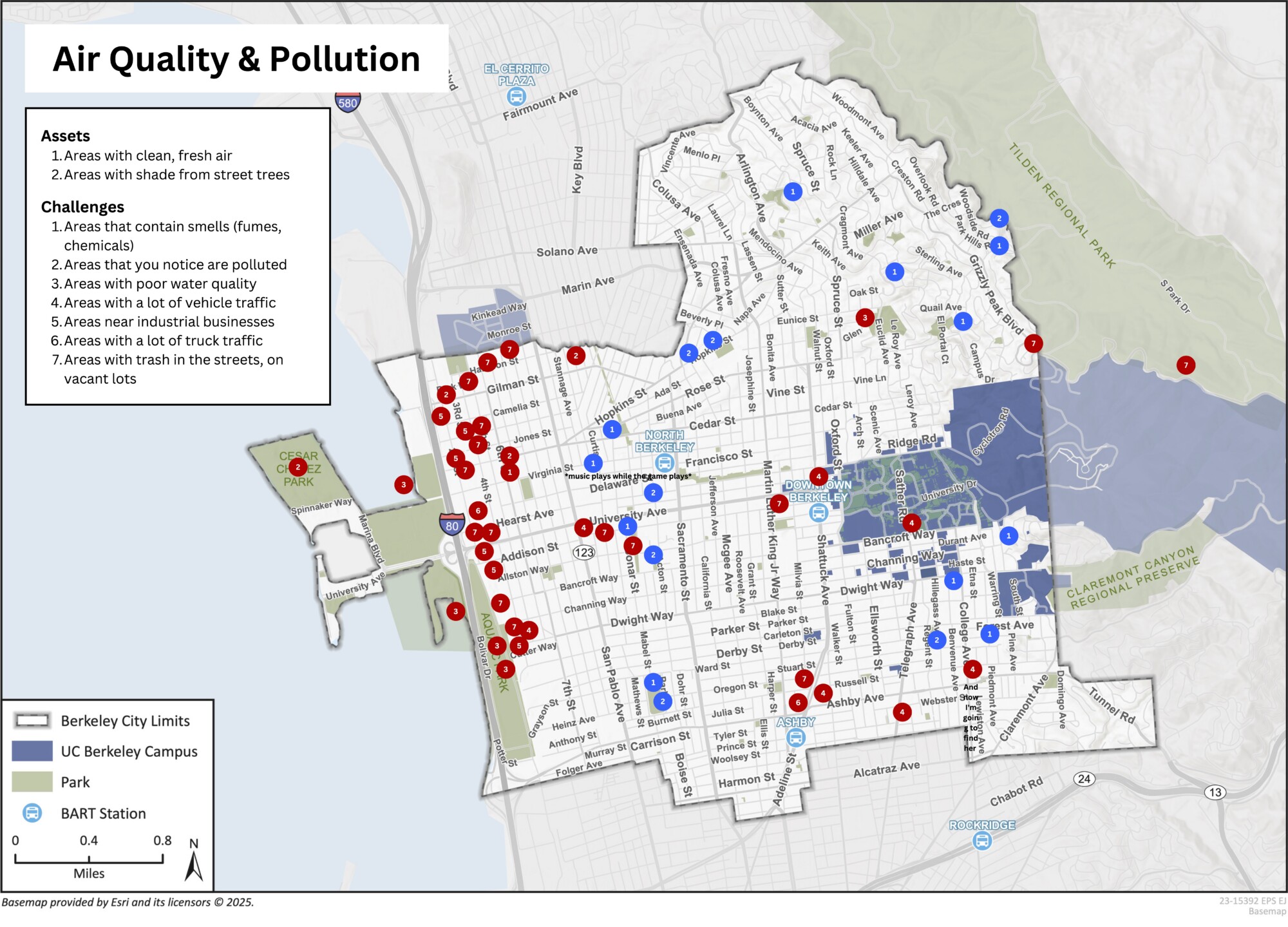
Our project team reported back session data in digestible formats that could be shared back with the public and could also be used by the City and the technical team to help craft the plans. Below is a compiled map that we included in our first summary report showing both assets and challenges related to air quality, as identified by the community.

Make
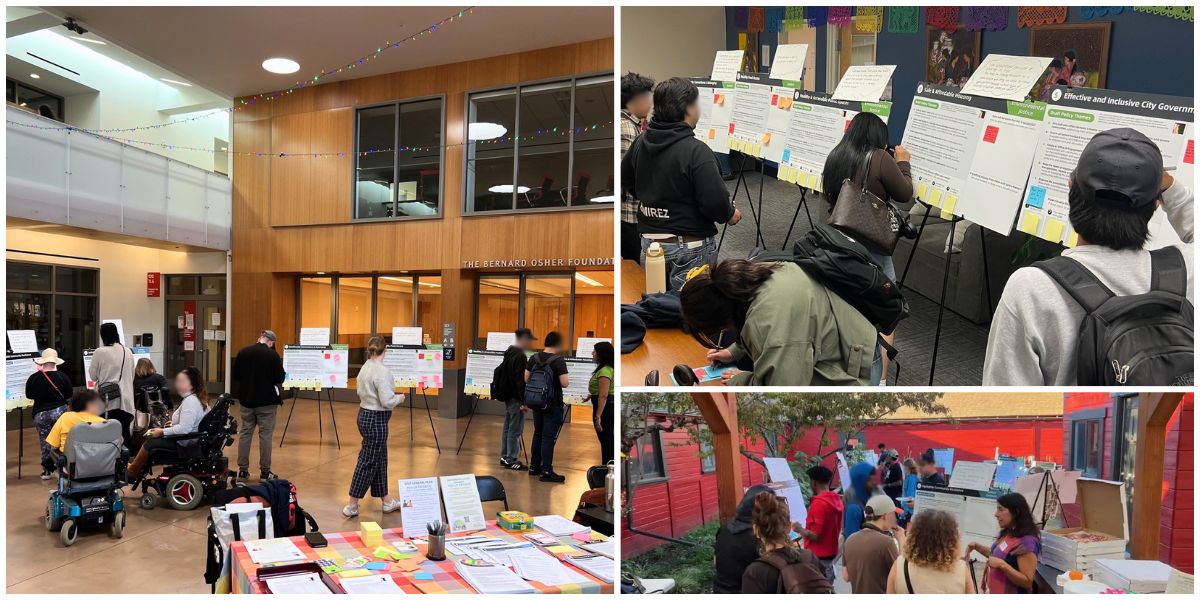
Based on community feedback from the first round of engagement, we designed the second round of engagement in the form of a pop-up workshop series (with a parallel online survey) to gather resident feedback on draft Safety and Environmental Justice policies. The draft policies had been co-created with the CAC, and our team presented them in concise, accessible language. Over a two-week “roadshow” across multiple community venues, the City invited community members to review portable, non-presentation-based exhibits and share input via dot-voting and written comments.
To support this effort, CivicMakers created a detailed Community Roadshow Plan and facilitation toolkit that Berkeley staff and partners could execute consistently across venues, and provided facilitator training. Deliverables included portable multi-language exhibit materials, print and digital feedback tools, staffing and room-flow guidance, step-by-step data capture protocols, and facilitator instructions emphasizing accessibility and de-escalation. Together, these outputs ensured the City could gather high-quality community feedback at scale and translate it into refined policy and implementation decisions.