


Case study: CA Labor & Workforce Development Agency's First-Ever Strategic Plan
An equity-centered strategic plan to achieve a common vision for California’s workers
CivicMakers partnered with the California Labor & Workforce Development Agency (LWDA) to co-create an equity-centered Strategic Plan that will guide the agency’s work over the next three years (2026 – 2029). Initiated through the Governor’s Executive Order on Equity (N-16-22), this would become LWDA’s first Strategic Plan. LWDA sought a partner that could work collaboratively and lead a comprehensive engagement process to ensure this strategic plan served as a shared framework to guide LWDA and its broader ecosystem of partners to support workers across California.
CivicMakers facilitating an all-staff strategic planning and training session held on January 15, 2025

Listen
We wanted to ensure the process of developing the plan was rooted in equity, as much as the final product was intended to be. We worked closely with the LWDA Strategic Planning team to design and lead an inclusive planning process that would bring LWDA staff and partners into the process of shaping the focus and language of the plan.
Phase 1. Initial Framing and Internal Engagement
Our process began with interviews and a survey to gather insights from LWDA staff and leadership, shaping the North Star statement, guiding principles and strategic priorities. Below are some of the research methods we applied during this Listening Phase:
- Analogous research – reviewing other California agencies strategic plans and plans from across the country
- Nine interviews with LWDA executive leadership and deputy secretaries
- Seven interviews with department heads and executive level team members
- A focus group with seven non-appointed LWDA team members
- An employee feedback survey to get early input from staff on drafts of the north star, strategic priorities and guiding principles
Phase 2. Co-Designing with LWDA’s Broader Ecosystem
LWDA is tasked with providing oversight to various departments, boards and a panel whose respective work and institutional mandates differ greatly. To better understand these different perspectives, we asked interviewees to first sketch how their work intersects with LWDA. This gave us a visual representation of where there might be gaps and intersections between the entities.
In addition to deep engagement with LWDA’s sub-agencies, we held an in-person co-design and training session with all LWDA staff so that they could be brought along and contribute to the process. The session included segments on psychological safety, effective teaming, and generative discussions about what equity means to the agency, and how it can be operationalized in the Strategic Plan. The session helped to further refine how the guiding principles and strategic pillars could be translated into real, tangible values and outcomes for California workers.

Learn
Through our conversations, we could clearly see a shared desire, both within LWDA and across the departments, boards, and the panel it oversees, to intentionally bring together worker centered systems and create opportunities for more collaboration, problem-solving, and to share and access critical data.
“We’re like a puzzle, but not sure where we all fit, and missions are parallel but not actually aligning. There could be more sensemaking about how different orgs connect…and mapping out continuity of care – understanding where Californians are showing up across departments so we can be more effective at collectively serving them.”
This re-affirmed the importance of this planning process as an opportunity for collaboration and problem-solving. What we also know is that equitable collaboration doesn’t prescribe participation. Equitable processes can get conflated with ‘broad inclusion of various stakeholders’, without taking careful consideration of who really needs to be at a meeting, or whose unique experience might contribute to decision-making. Through this process, we recognized that equitable engagement also means being mindful of when involvement adds value and respecting people’s ability to determine where their time and participation can have the greatest impact.
Other insights collected through engagements with LWDA staff helped to guide our approach, including the desire to:
- Make stronger connections between the day-to-day work of staff, and how it impacts Californians
- Find opportunities for increased collaboration across roles, so that staff don’t feel isolated or that they’re working in siloes
- Ensure that roles within the Agency itself are high quality, family-sustaining jobs where everyone can see their contributions to a California economy that works for all

Make
For the final phase of this work CivicMakers supported LWDA team members in engaging external stakeholders, including community based organizations and workforce advocates, to make sure the plan includes the voices of those most affected by labor policies. We supported these efforts by shaping an engagement approach and engagement toolkit that was then handed off to LWDA staff.
We synthesized findings across all phases, and created feedback loops between those who had been previously engaged, so both internal and external stakeholders could see where their insights showed up in the final version of the Strategic Plan.
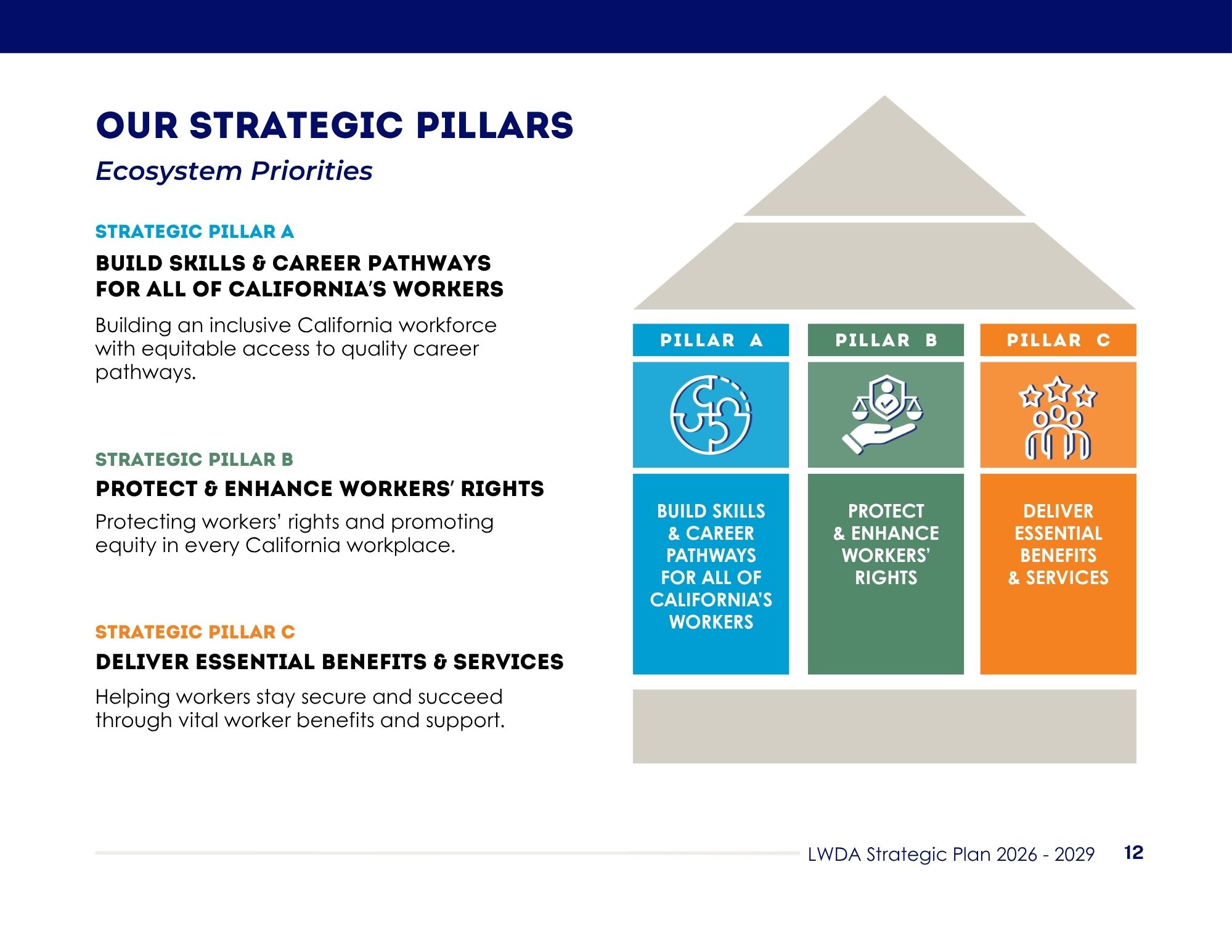
Due to the iterative nature of its development, the structure of the plan was reimagined away from strategic projects, toward strategic pillars. As LWDA provides oversight to programming, instead of direct programming, the pillars help to guide priorities for project work that will be carried out through its various entities.
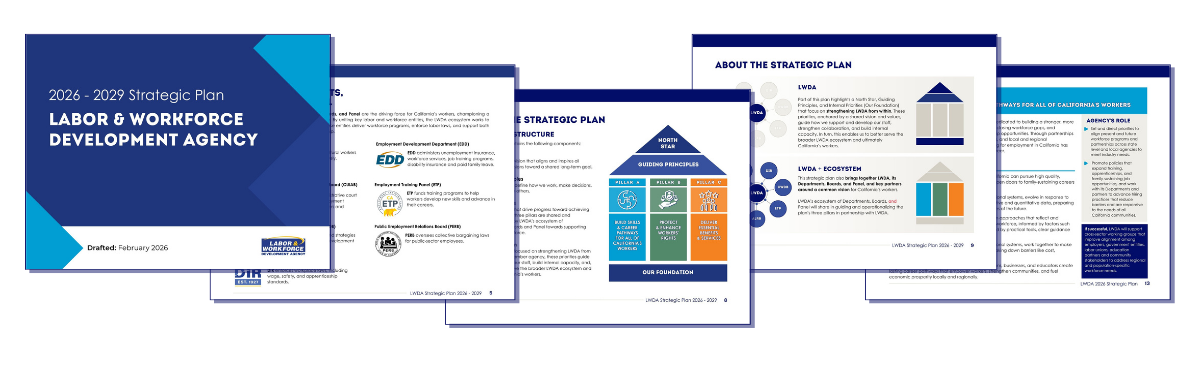 We developed an Ongoing Engagement Plan which provides guidance for LWDA and its appropriate staff to test the effectiveness of programming with key external stakeholders, and iterate as needed throughout the Plan period. Finally, we developed an internal and operational version of the plan to ensure the north star and guiding principles would drive how LWDA operates, along with internal strategic pillars.
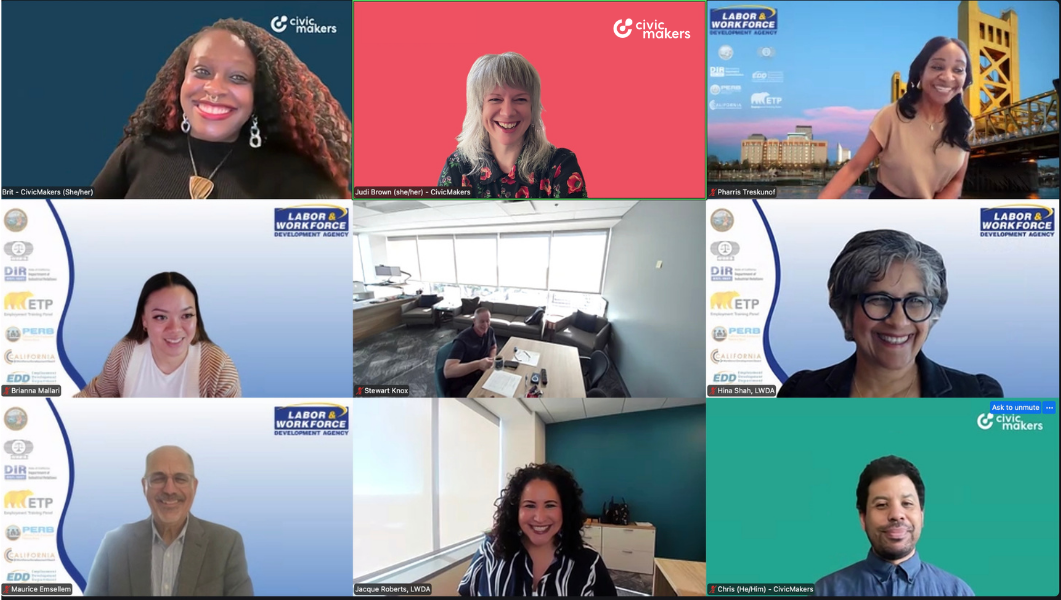
This work culminated in a Virtual Open House, where the final plan was shared and community partners were invited to submit any clarifying questions about the development process or plan elements.
In the words of Labor Secretary Stewart Knox:
“From this work a 20 page living document was created, built from honest reflection and bold ideas meant to guide action. It captures how LWDA intends to build on what’s working and how they plan to close gaps, so programs and services delivered across LWDA’s departments, boards and panel are more accessible, responsive, and connected and enforcement efforts to safeguard workers’ rights are strengthened.”

“CivicMakers genuinely center people, valuing and creating space for different experiences and perspectives, and asking deeper questions about who may be missing or impacted. There is a difference between people who know the framework and people who truly believe in the work, and that was clear throughout the process. As a result, we created an equity centered strategic plan that feels authentic to who we are as an agency and practical enough to actually guide how we move forward.”
Pharris Treskunoff Deputy Secretary, Equity & Strategic Planning; Labor & Workforce Development Agency