

Case study: HCD Learning Lab across Santa Cruz County’s Workforce Ecosystem
A collaborative initiative to research and test ideas that strengthen service delivery
CivicMakers partnered with the Santa Cruz County Workforce Development Board (WDB) to launch an ecosystem-wide HCD Learning Lab, with funding from The James Irvine Foundation. This journey began with a five-month cohort where teams across eight different organizations practiced listening, learning, and making to improve and enhance workforce services. Three teams returned for an eight-week prototyping sprint to test and make recommendations for system-wide implementation.

Listen
Our goals for the applied learning program were to strengthen collaboration, improve service delivery, and build more equitable solutions for community members. We kicked off this engagement by conducting discovery interviews with WDB staff and ecosystem* partners, to surface themes that could serve as anchor points for the Learning Lab.
*The term “ecosystem” in this context refers to organizations that have an intersection with workforce services delivered in Santa Cruz County. Participating organizations included both mandated partners under the Workforce Innovation and Opportunity Act (WIOA) and other community organizations, services providers and educational institutions.
We conducted these interviews at the outset of the project to serve multiple purposes: it allowed us to better understand the contexts of the individuals within the system; gave us an opportunity to gain some trust with potential participants; and anchored the learnings in design challenges that deeply resonate, so that learning would feel more natural and immediately applicable.
Throughout this entire effort, we worked hand-in-hand with our partner at the SCC WDB to help them establish HCD practices within the workforce ecosystem. With our discovery insights gathered, we partnered with this in-house champion to design a program that would (1) work toward the shared goals we defined and (2) invite-in a range of organizations and staff roles to team up on design challenges.
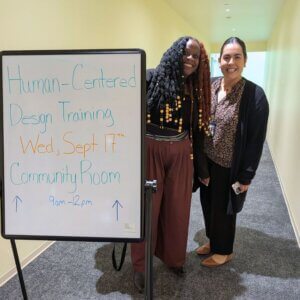
Image Caption: Our Senior Design Strategist, Brittany Henry, with Assoc. Human Services Analyst at Santa Cruz County Workforce Development Board, Brenda Diaz-Rivas pose in front of a sign inviting participants to the HCD training on September 17, 2025. Brenda has been our co-pilot since day one, learning alongside our team the ins and outs of the HCD process, so that she can continue to embed the tools and mindsets across the system.
We recruited Learning Lab participants from across Santa Cruz County’s workforce ecosystem, and were fortunate to have the representation from seven different organizations, including:
- Santa Cruz County Workforce Development Board
- Goodwill Central Coast
- Cabrillo College
- Community Action Board of Santa Cruz County, Inc.
- Employment Development Department Workforce Services (EDD)
- Santa Cruz Small Business Development Center
- Santa Cruz County Office of Education
We kicked off the program by facilitating an in-person “Introduction to Human-Centered Design” session, to give participating organizations a taste of the hands-on, experiential learning that they’d get out of the Learning Lab.
We also leveraged this engagement to vet and prioritize the potential design challenges directly with the people closest to the work. This helped us narrow in on final topics to explore further in the five-month Learning Lab:
- How might we…create more ongoing opportunities for board members, partners, and frontline staff to actively engage in the continuous improvement process in ways that build trust, visibility, and shared ownership?
- How might we…improve referral processes to create a more seamless experience for customers?
- How might we…revise/expand our definitions of success to ensure we are impactful from the customer perspective?

Learn
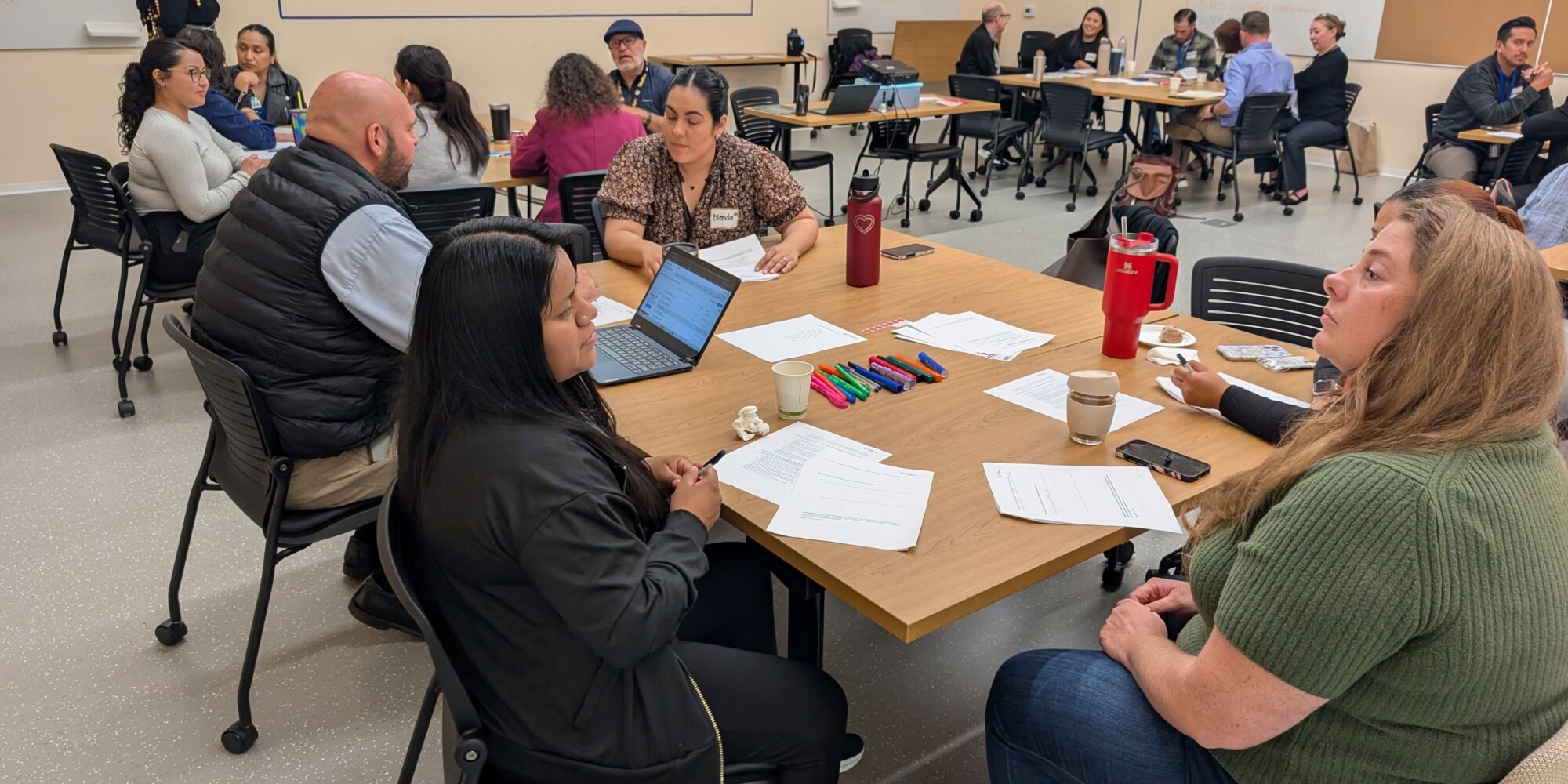
Over five months (September 2025–January 2026), cross-organizational teams applied HCD tools such as interview protocols, affinity mapping, ideation exercises, and prioritization frameworks, to real workforce challenges. They conducted stakeholder interviews and analyzed the resulting qualitative data to find patterns and root causes.
Through the HCD Learning Lab, members of the cohort had the opportunity to:
- Collaborate with peers to continuously improve workforce services for customers across the county
- Gain a deeper understanding of workforce ecosystem related challenges from the perspective of people most impacted by them
- Develop, test, and refine ideas with stakeholders
- Learn and directly utilize co-creation skills, tools and templates
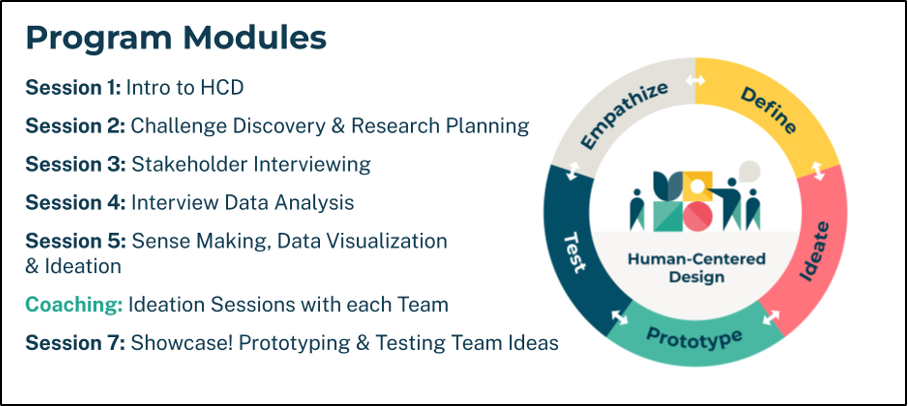
The program combined five virtual sessions with two in-person sessions, layering coaching and between-session assignments so learning became applied and continuous. While the program faced its share of challenges in navigating competing schedules and bringing together staff from across organizations and position levels, we were encouraged to see participants find value in the tools and environment of the program:
“…having the connection with so many stakeholders and client providers around the community really helped me have a better understanding of who is doing what, how they are serving people. And what are the issues occurring across the board that I wasn’t aware of.”
“The affinity mapping will be useful for strategic planning… Approaching things from a human-centered design mindset will also better help us be more accessible, equitable, approachable. I was blown away with this, how you can take detailed, complex topics and break them down in fine detail, and have a bigger picture understanding of minute details that cause hiccups for clients.”
“What I found valuable, not just being able to spend the time with everyone, but having the shared experience and shared language. People can talk amongst each other using these terms and support each other in the process.”
The Learning Lab culminated in a Showcase on January 28, 2026 that invited all the participants to connect in-person and invite others to hear the teams’ insights and recommendations. At the showcase teams presented 13 ideas to address the four different challenge areas and attendees used an Impact/Effort Matrix to sort those ideas by desirability and feasibility. (You can read more about the Showcase in our blog post: Santa Cruz County’s Workforce Ecosystem Showcases its Big Ideas)
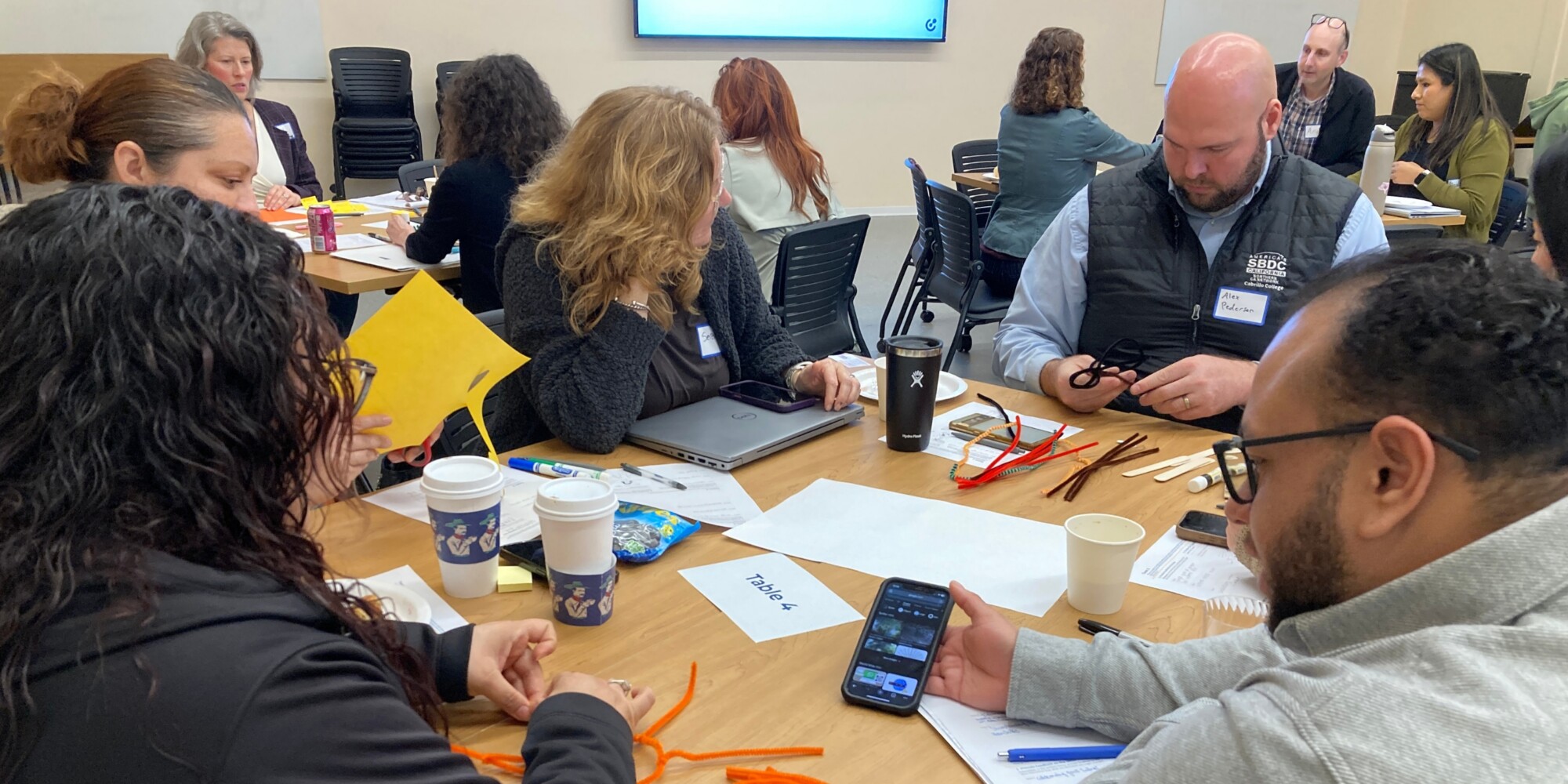
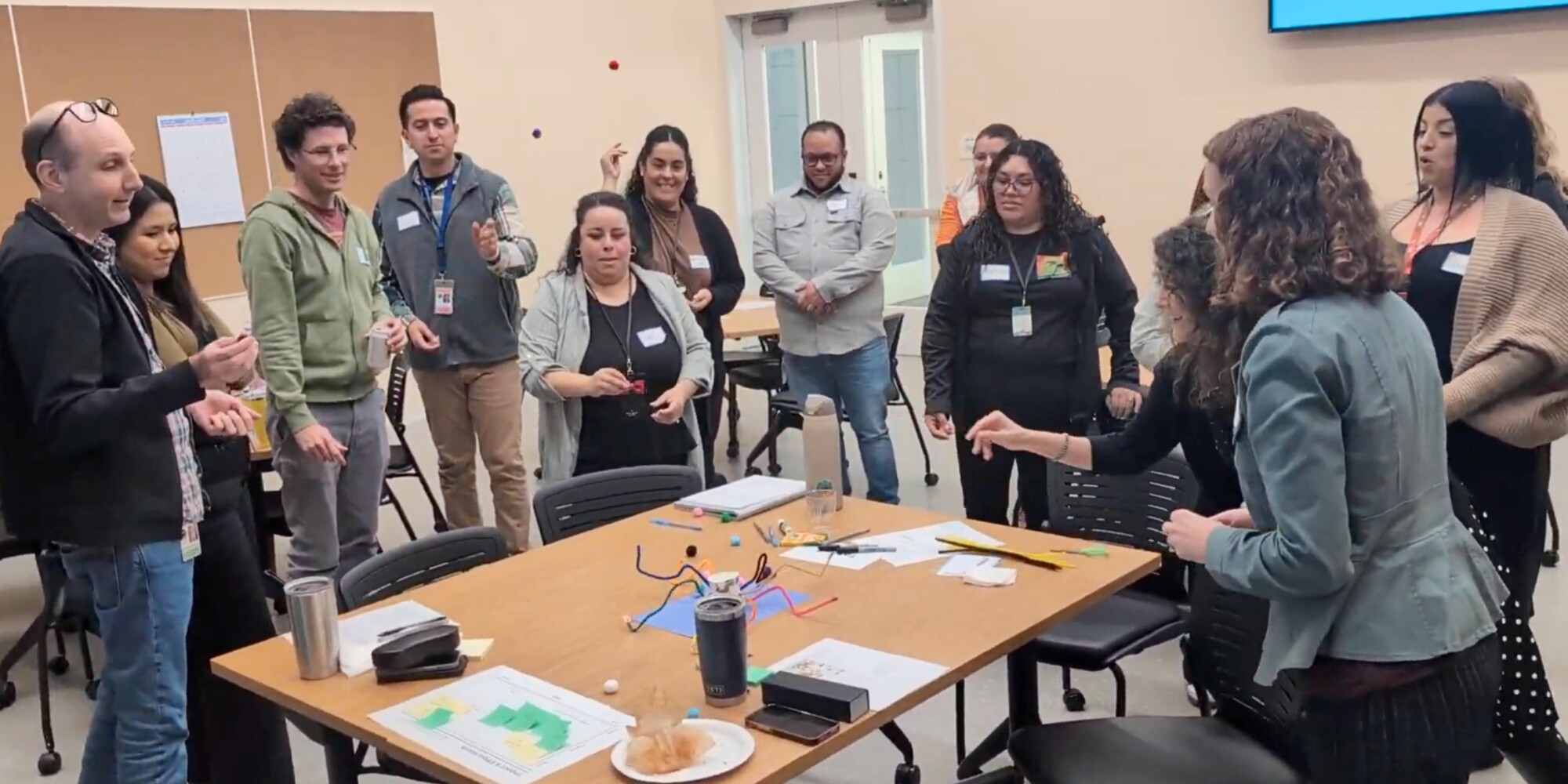
After collecting input on the 13 ideas presented at Showcase, our team worked with our WDB partners to identify ideas that were primed for the prototyping phase. The selected topics included:
- Mentorship Program. Develop and test a structured mentorship model as a vehicle for relationship building between position levels.
- System-wide Continuous Improvement Training. Develop a training that gives partners a shared approach to improving service delivery.
- Standardize Warm Handoffs for Referrals. Define and develop an introduction process to make it more welcoming & comfortable for customers.
What came next was the eight-week prototyping sprint to bring these ideas to life! This is where we worked to translate how the pipe cleaners and googly eyes could lead to meaningful changes across the system.

Make
As we pivoted from the challenge exploration phase of the Learning Lab into a prototype development phase, we also had the opportunity to incorporate lessons that we’d learned around the design of the program.
Some strong themes emerged as we reviewed and revisited the conversation. Below are some of the key takeaways:
Insight |
Changes to the Program |
| Not everyone has access to Sharepoint – which created recurring challenges around managing permissions and document access. | Rather than trying to standardize the tools we used across teams, we checked back in to confirm what tools they preferred. We created and managed Google Drive folders where those were preferred.
|
| Scheduling meetings with team members from different organizations was challenging, especially when we tried to coordinate timing asynchronously. | In each coaching session, we made sure to provide time to confirm the next meeting with everyone and calendar any working sessions for the team to complete next steps.
|
| Teams found it challenging to devote time to drafting new content (such as interview protocols, outreach language, and organizing their data analysis). | We provided each team with more sample language and structure that we could revise collaboratively, reducing the amount of work to be done outside meetings.
|
We also knew it was important to carry forward some of the strengths of the programs, including:
- The relationships built with the participants and within teams
- The space to collaborate virtually, which provided the opportunity for people to participate who otherwise couldn’t commit to in-person sessions
With this in mind, staff members from the WDB recruited teams from the original cohort to continue carrying this work forward. With facilitation and coaching support, teams were guided through an eight-week sprint to:
- Develop Prototypes: Review and refine the initial idea into a more descriptive and interactive prototype.
- Prototype Testing: Develop a survey to invite structured feedback on the prototype and develop a stakeholder outreach plan. Review survey findings and incorporate feedback into the prototype. Prioritize revisions and begin documenting key implementation considerations that emerge through survey feedback.
- Prototype Implementation Planning: Share refined prototypes with stakeholders, demonstrate how previous feedback has been incorporated, and gather additional input focused on implementation.
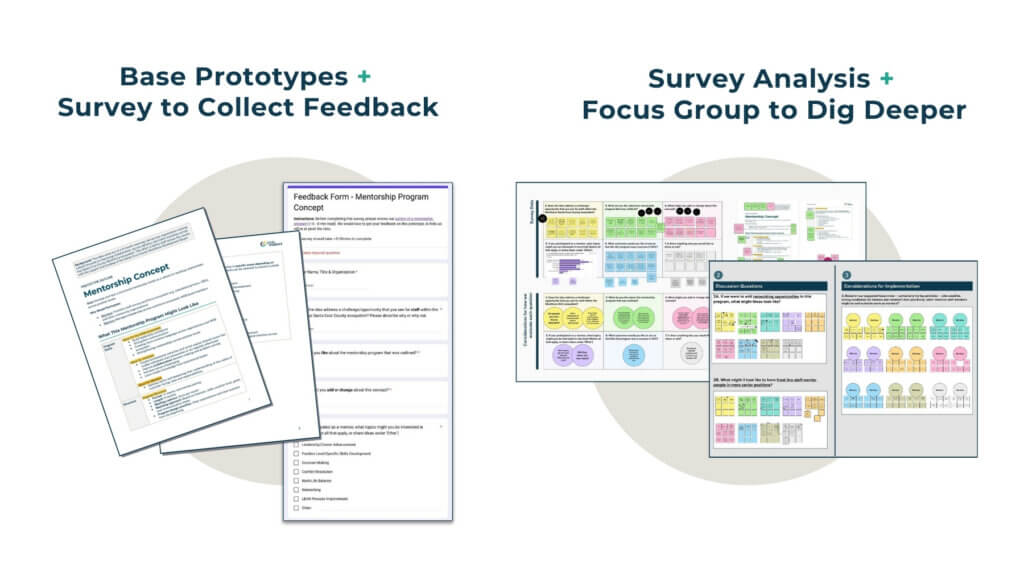
The prototyping phase culminated in a two-hour virtual “Showcase” event that brought together teams, WDB staff, and other stakeholders to celebrate the teams’ work, gather feedback, and chart a path forward for implementation. Presentations were followed by structured Q&A and a facilitated breakout activity in which collaborators provided feedback on the potential next steps and implementation timelines across the three ideas.
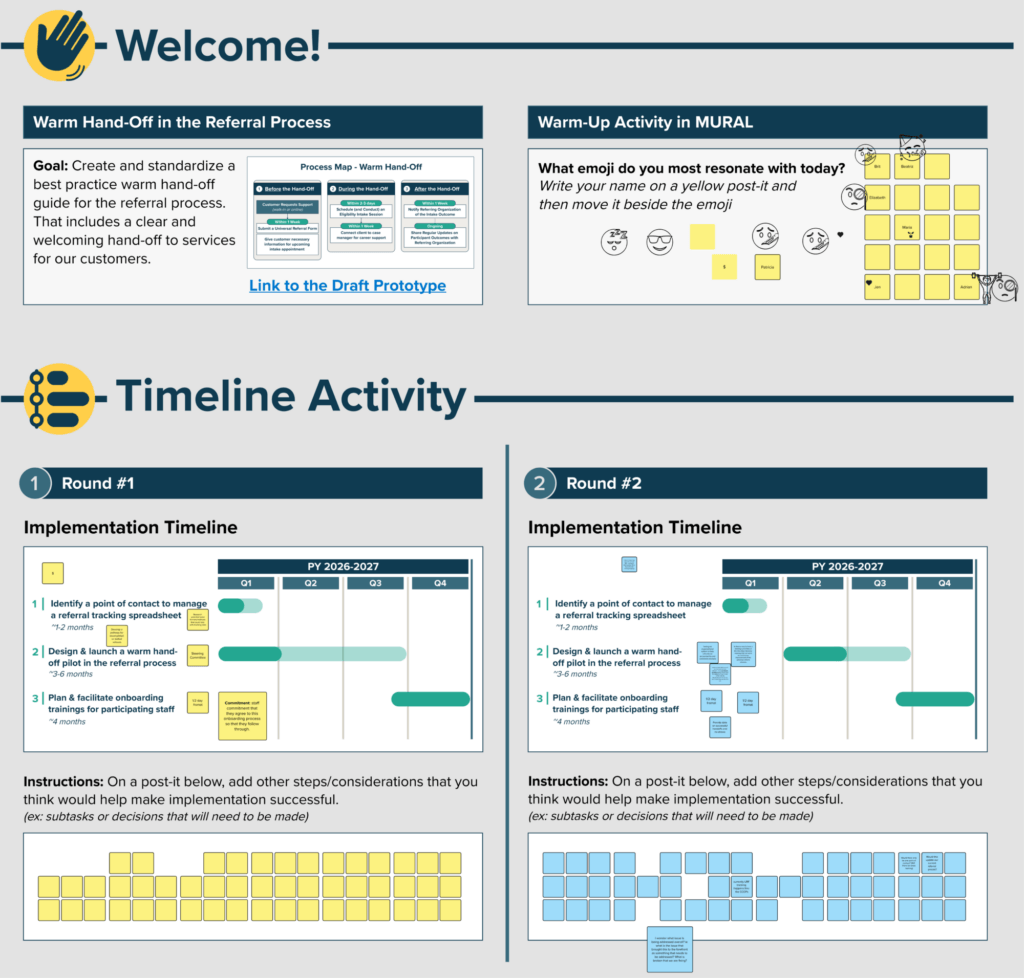
To facilitate the feedback from participants, which included board members and the project’s funder (The James Irvine Foundation) we got everyone into a MURAL template we created. This gave us an opportunity to further vet the likelihood of implementation based on the perspectives of multiple stakeholders across the system. Here’s what they had to say about the prototypes, and the session itself:
“I like the warm hand-off project and see tremendous value for our clients with deeper and better coordination between agencies and organizations. Instilling top to bottom LEAN mindset would also be hugely beneficial ecosystem wide.”
“Just having that group of engaged and dedicated folks there collaborating, sharing, and engaging was radical. The breakout sessions in Mural were super cool.”
The session closed with WDB leadership outlining next steps to advance the prototypes and introduce a Community of Practice intended to sustain HCD momentum and ongoing peer learning beyond the lab. CivicMakers will provide light-touch support to teams as needed, while also co-designing and piloting a Community of Practice within the SCC WDB ecosystem — one that builds in space for partners to learn and adapt HCD practices and skill sets within a collaborative, project-based environment.
“CivicMakers was a thoughtful, flexible partner who helped us make real progress on some messy, system-wide challenges. Their facilitation, tools and coaching helped our ecosystem innovate, strengthen relationships and build solutions we’re actually excited to implement. Just as importantly, they left us with the confidence and momentum to keep building on this work together.”
Andy Stone Director; Workforce Development Board, County of Santa Cruz