Civic Summons: 2046
Opening a portal to civic assemblies on climate resilience in Miraloma Park as a part of the Future of Us festival
 |
GUEST AUTHOR Suzie McMurtry is an interdisciplinary artist and design researcher from the San Francisco Bay Area. As a fellow of the Future of Us festival, 2026, Suzie designed a participatory future where she invited her neighborhood to enter a portal to a future where civic assemblies are a common way SF navigates climate resilience. |
In the year 2046, it’s normal to spend some hours each year in a civic assembly learning about a hyperlocal public issue and working with fellow residents to propose solutions. Artists are hired to make sense of the state of climate resilience and share it with neighborhoods as they show up for their civic summons. There is no single-use plastic in the room. Participants enjoy seasonal snacks while imagining creative approaches together, with their neighbors, in their own neighborhoods.
That’s the future 50+ San Francisco residents stepped into over two activations during the Future of Us festival this July. These activations investigated two hypotheses:
- Hypothesis #1: Disenchantment with the state of democracy at large is pushing people toward their neighbors and fueling an appetite for hyperlocal impact.
- Hypothesis #2: Participatory experiential futures and systems-minded design research play a key role in making civic assemblies more like cultural events and less like a town hall.
To test these hypotheses, Suzie McMurtry (Lead Designer) designed Civic Summons: 2046. This immersive experience was a call to residents to channel their collective desire for a climate resilient future, their lived experience as a resident of this beautiful city, and their collaborative, creative energy toward a shared challenge.
As participants arrived, a Civic Summons Experience Steward greeted them with a summons card, a thank you, and a warning of the jolt of time travel. Once they passed the threshold into this future – surrounded by intentional and sustainable materials – participants filled a commemorative ceramic plate with seasonal snacks and wandered into the main hall to interact with a timeline and gallery. They then added their own visions and hopes to a timeline of the previous 20 years (2026-2046).
A timeline & gallery telling stories of a climate resilient future
The timeline was pre-populated with incidents and stories that situated us in an optimistic but, we think, not too idealistic future where we have mostly reached the goals in SF Environment Department’s (SFE’s) 2026 Climate Action Plan (CAP). For example, the timeline showed that by 2040, we max-out tree canopy coverage, especially in the city’s southeastern part, for a total rate increase of 7,000 more trees planted per year.
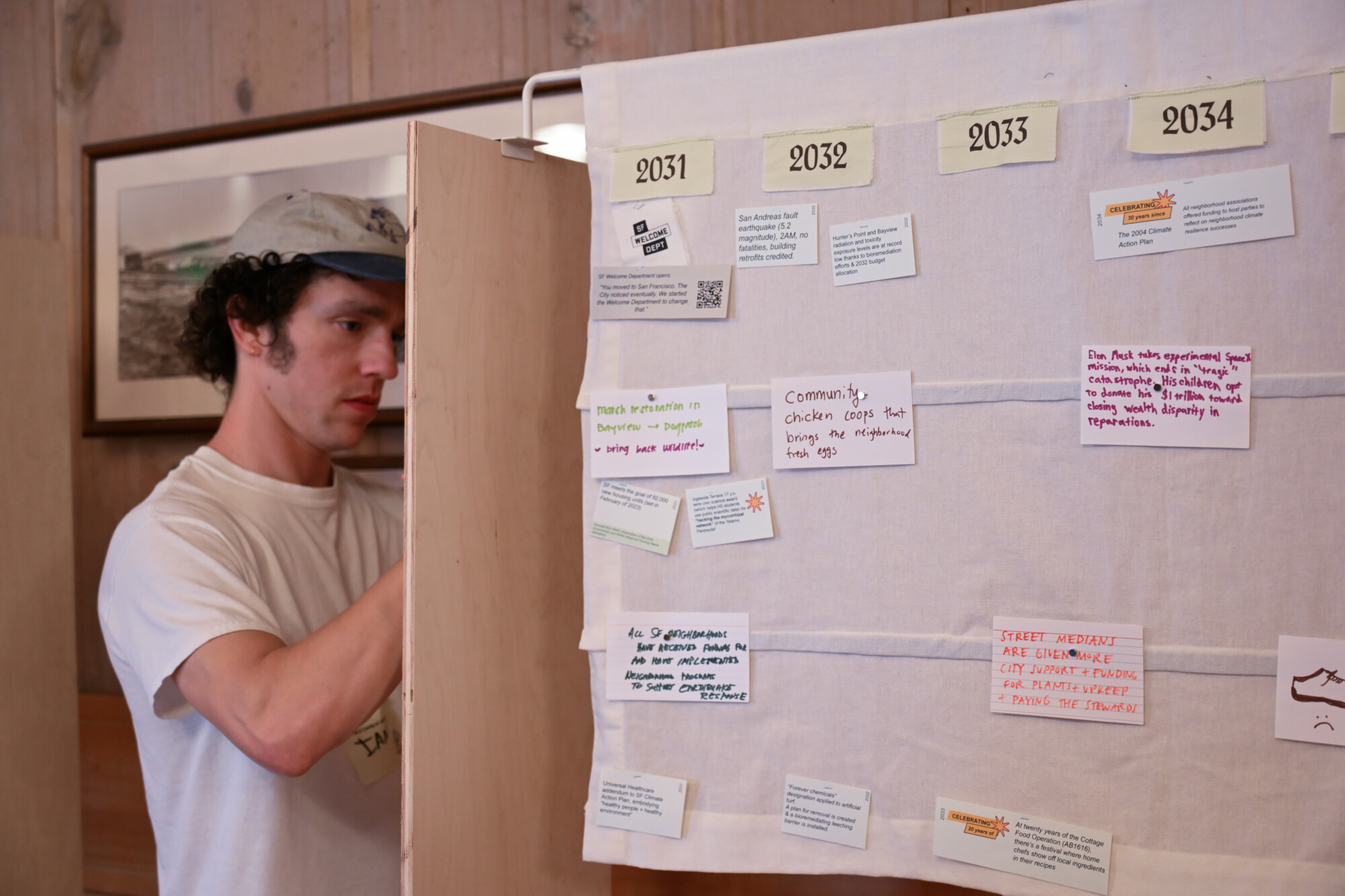
To give even greater depth, McMurtry also filled in more speculative details of this hopeful future:
“In 2028, SFE’s Biodiversity Guidelines now include mycorrhizal health, triggering an increase in soil health data mandates & support.”
“In 2042, 10 years after a significant San Andreas fault earthquake, we held the first of an annual awards dinner celebrating the critical role of residents who are a part of NERT (Neighborhood Emergency Response Team).”
There are hyperlocal stories, too:
“In 2040, a single-story community center with a repair shop & fungarium [a greenhouse for growing edible mushrooms], opened on top of the Stanford Heights Reservoir on Teresita Ave; it’s called the Cistern Community Studios.”
Upcycled, interactive, & edible: a gallery of artifacts from 2046
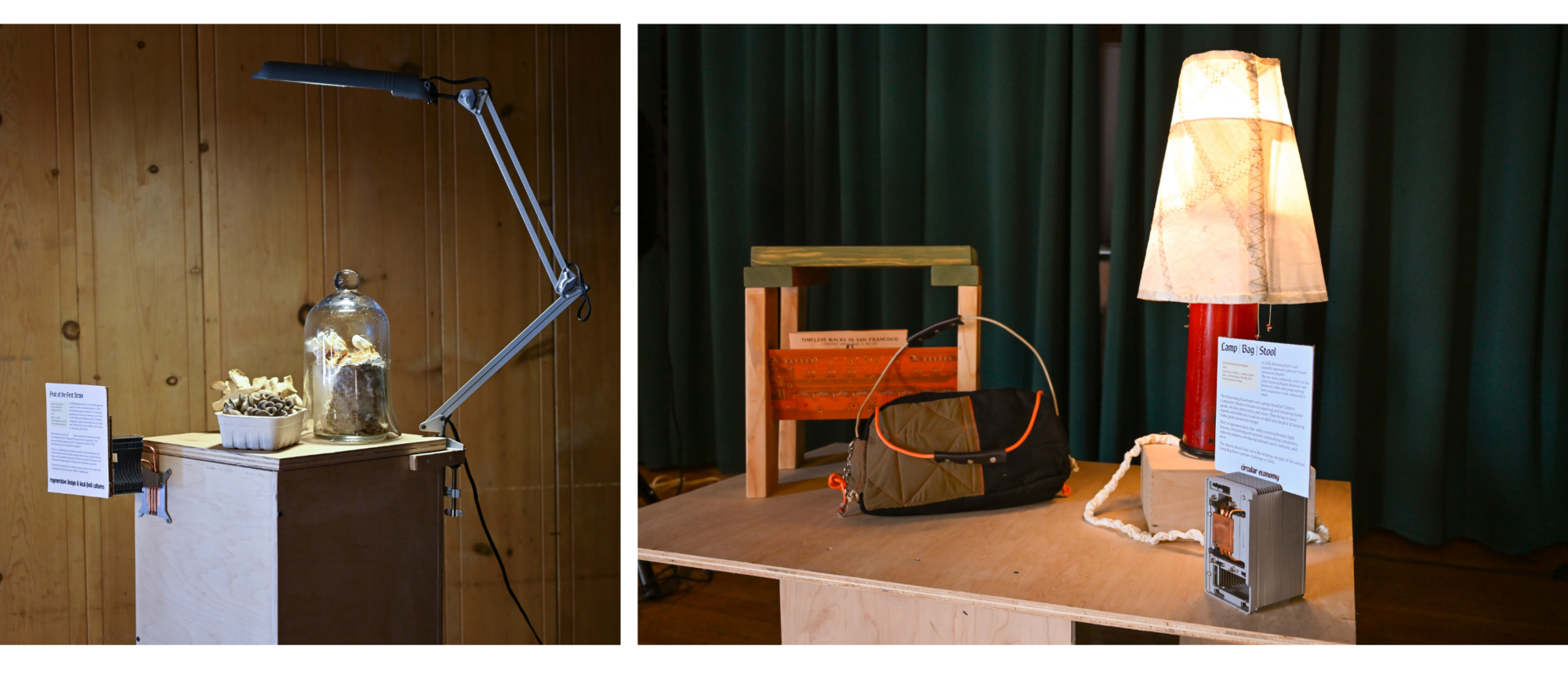
After perusing the timeline, residents wandered up into the stage area, where a gallery of five artifacts continued the story. First Fruit showed edible mushrooms “grown in the Cistern Community Studios fungarium” (est. 2040). The sculpture, installation, and time-based artworks on display in the civic assembly space show that in this future, artists are a critical part of making sense of the state of civic culture, generally, and climate policy, specifically. The installation utilized hardware salvaged from e-waste, construction waste, and textile scraps.
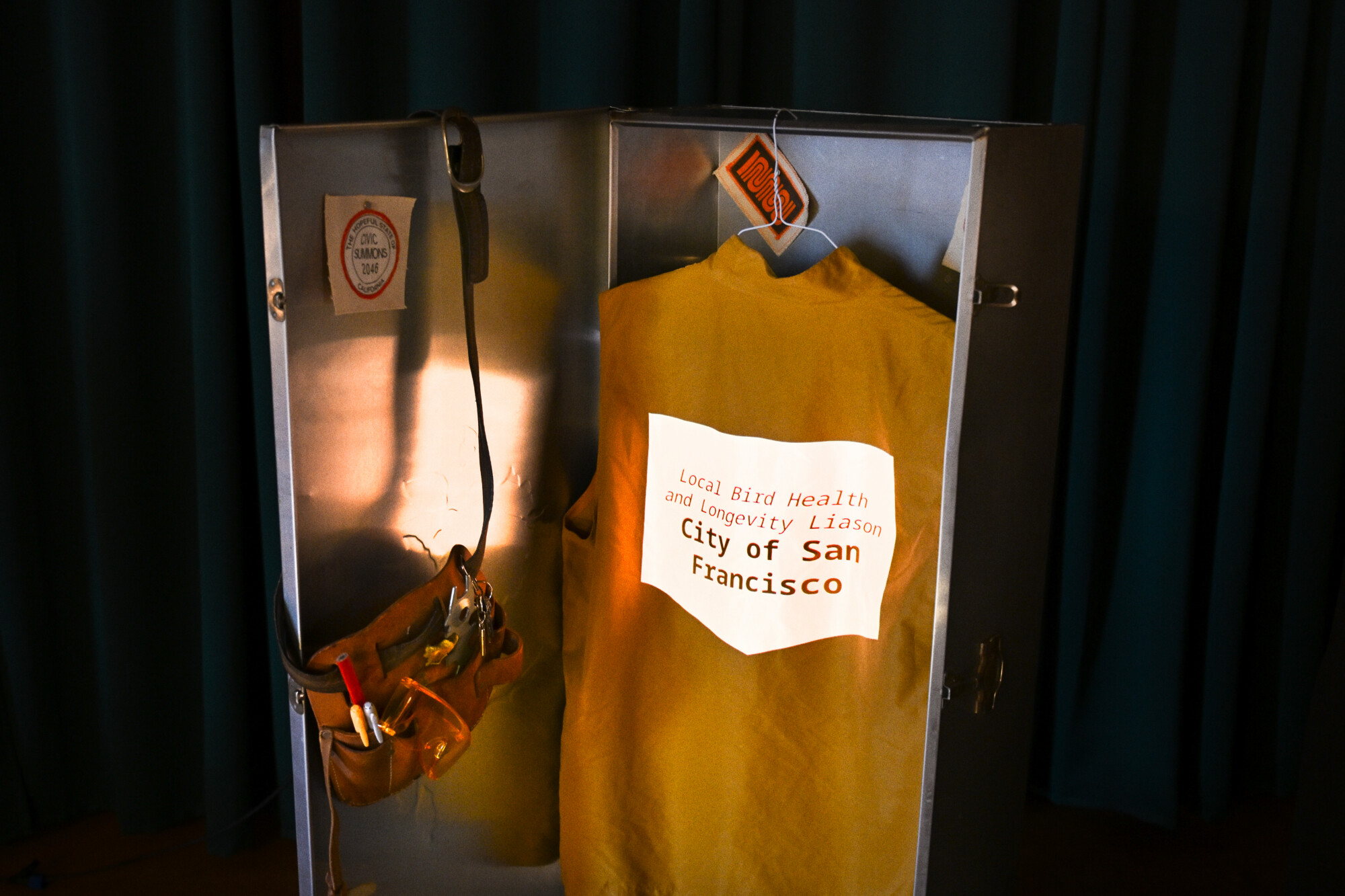
Visitors also added their own visions of 2046 City and County of SF job titles, with roles and teams like “Community Knowledge Bridge, You Know = We Know” and the “Local Bird Health & Longevity Liaison” giving color to a more people-powered public service.
Co-designing & prototyping policy, tools, and services in 50 mins!
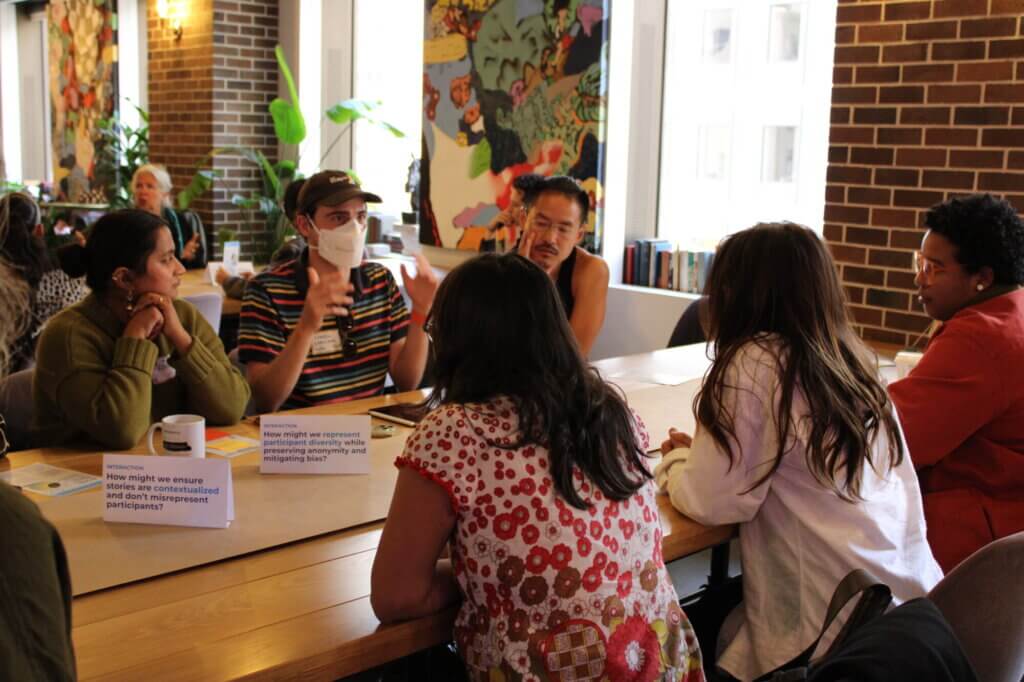
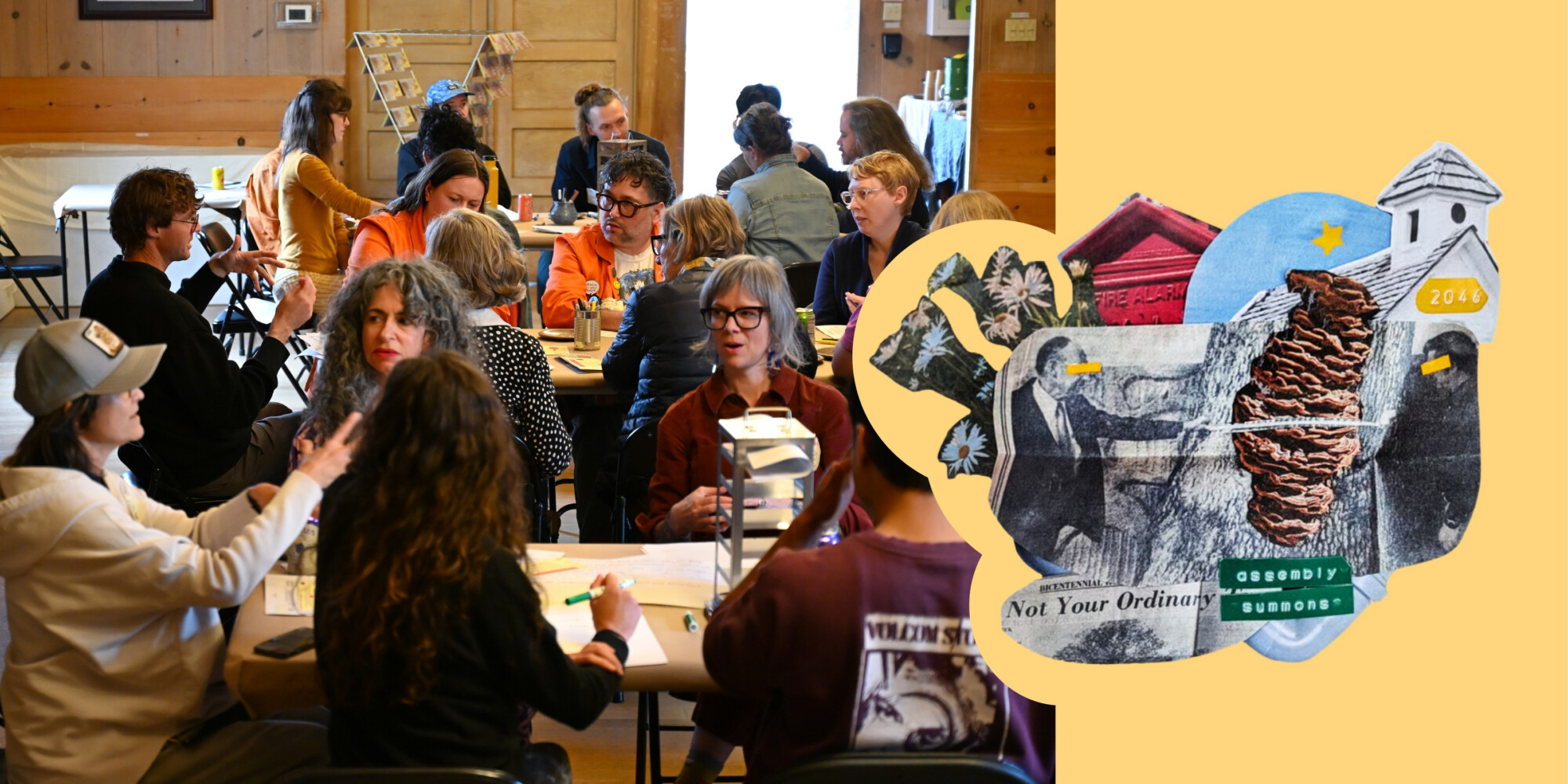
After participating in the activities throughout the room, attendees were called to join a facilitated table deliberation on one of three briefs:
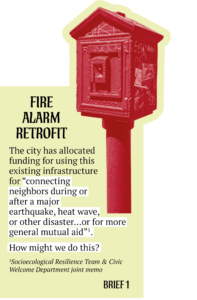
- Fire Alarm Retrofit: Reviving and improving our defunct yet charming 1860s curbside box fire alarm system to meet modern emergency response needs;
- Killer Fungus Tracking: Monitoring and mitigating a deadly fungus outbreak attacking Monterey cypress trees;
- Circularity: Nurturing the circular economy to eliminate waste and regenerate natural systems.
Led by expert facilitators (including Judi Brown, Cristelle Blackford and Leah Tremblay-Adams from CivicMakers), groups of 6-8 residents got to know one another and generated ideas for how to address their assignment.
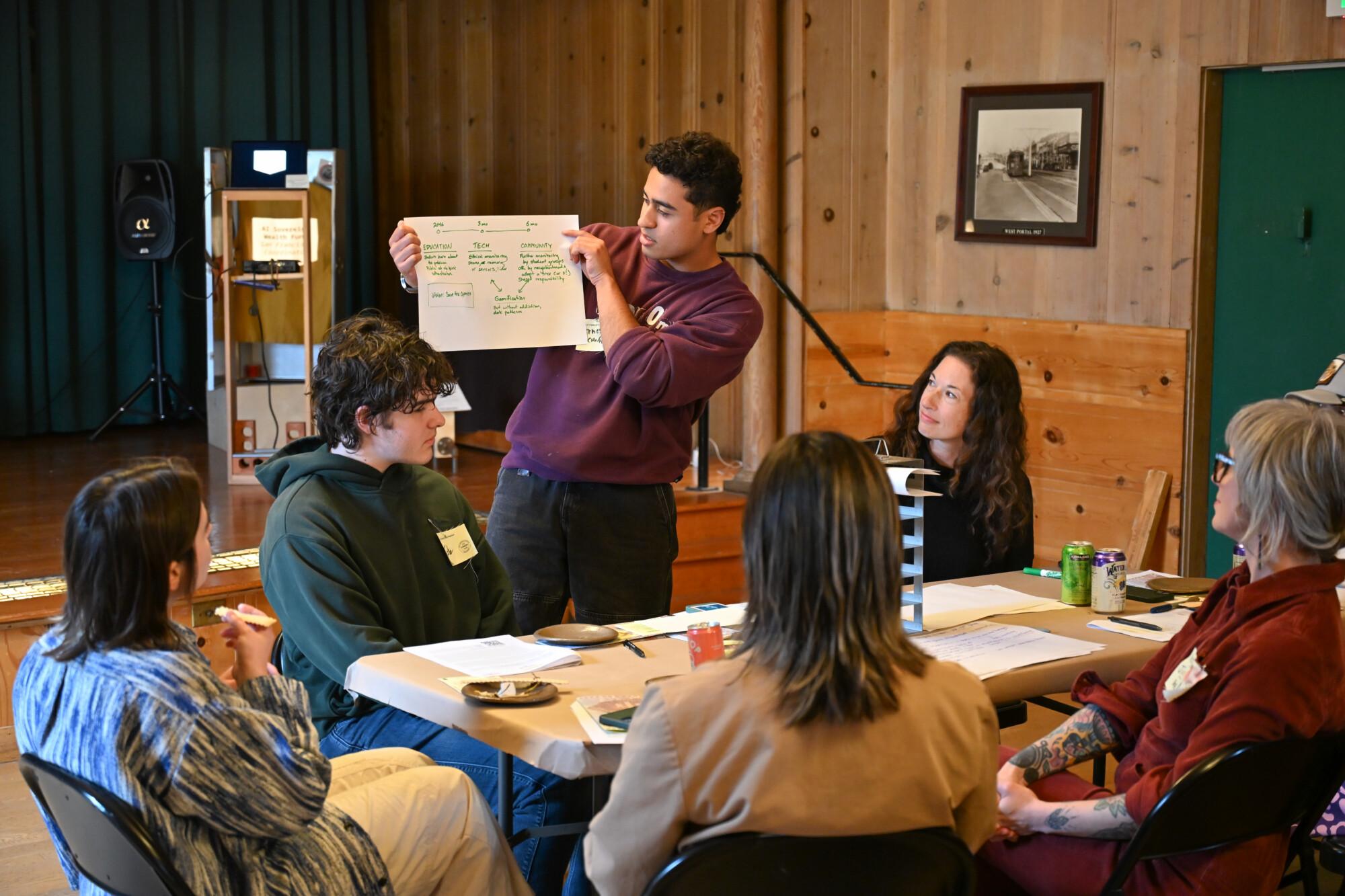
Some of what surfaced were friendly debate and questions about the state of social trust, technology and wealth inequity. For example:
“What would we need to trust drones to help track the spread of this fungus and not violate privacy?” (Brief 2: Killer Fungus Tracking)
“How do we make sustainability programs that work for real people? We want to create a trash tax, but how can we avoid burdening the already vulnerable?” (Brief 3: Circularity)
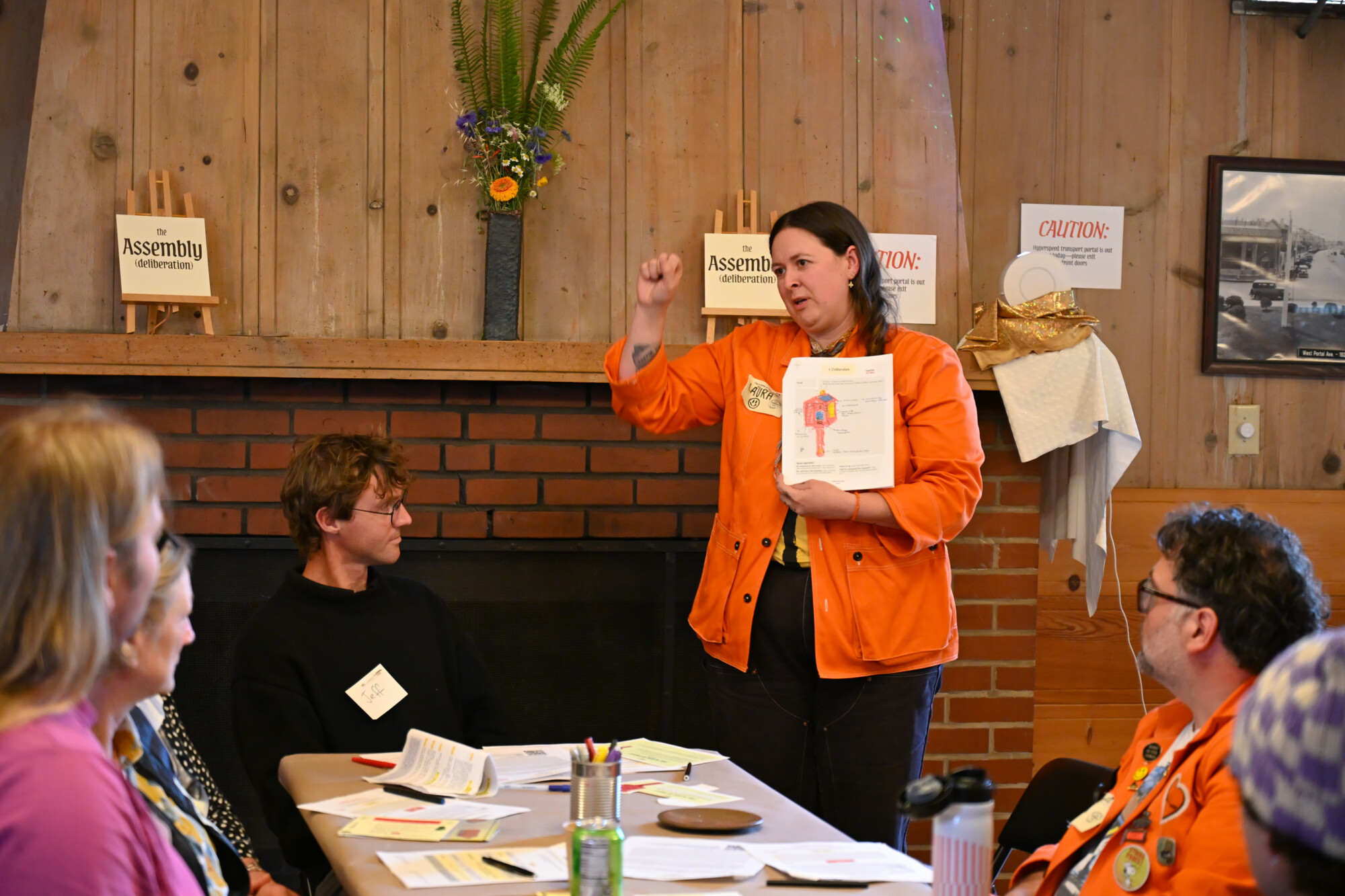
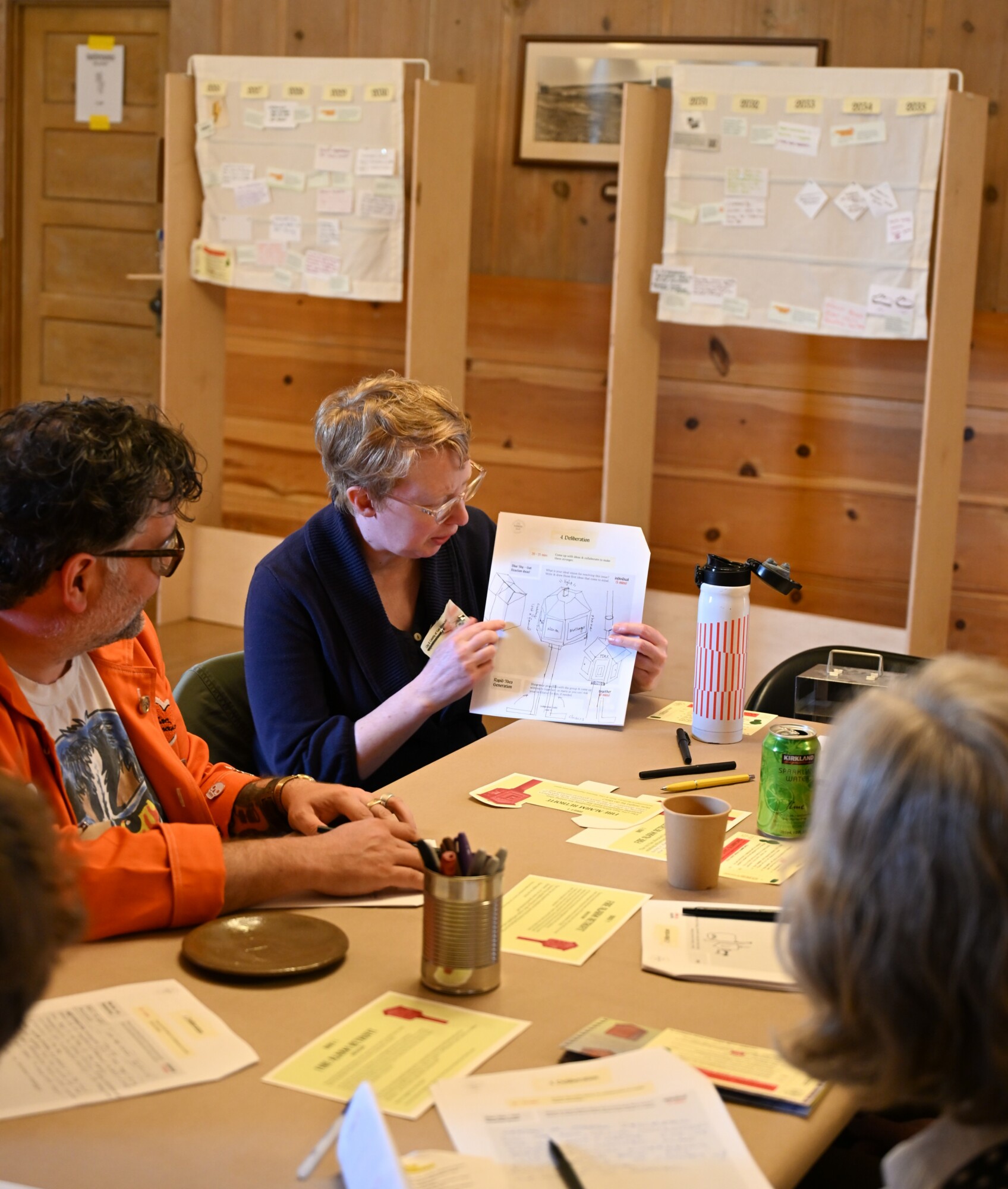
This event, like many Future of Us festival activations, aimed to make a case for artists as meaning-makers and neighbors as co-creators towards a more trusting, more collaborative, and more joyful San Francisco. At the conclusion of the facilitated deliberation sessions at Civic Summons, final proposals were presented to the room, before being submitted.
Why this matters now, here
Local and state governments need (and increasingly want!) resident input, as seen in the state’s Engaged California qualitative research tool; Public Policy Lab’s nationwide The People Say program for capturing people’s thoughts on aging; and in SF Environment’s own engagement programs.
Oakland is currently running the Bay Area’s first formal civic assembly about how to navigate vacant downtown commercial spaces. Social and institutional trust are a big part of equitably integrating participatory research methods into policymaking. Repeated, low-stakes, positive interactions rather than a single survey or public comment period will do more to slowly build this trust.
In the Bay Area, we collectively have many effective tools and deeply rooted positive intentions; as Steph Fine-Sasse put it at a Future of Us festival debrief:
“San Francisco doesn’t have an ideas or passion problem, we have a coordination of resources problem”.
What’s next
The proposals residents generated in their deliberations are already shaping further design research into the co-design of climate programs. In a session at the Governor’s Office of Land Use and Climate Innovation’s Resilient California Summit in Sacramento in October, we will be presenting a version of Civic Summons: 2046.
Stay tuned to hear about what the residents co-designed in their hourlong deliberations. And check out more photos and information, here.
If you’re doing adjacent work in civic assemblies, participatory experiential futures, design research, or creative approaches to public engagement (including using “serious games”), we’d welcome a conversation!
Thank you to the volunteers, facilitators, and resident time travellers for giving their energy to this in early July! The work we did together is helping to shape further design research around co-designing climate strategy and policy. Many thanks also to Robert Gee and the rest of the Miraloma Park Improvement Club (MPIC) community for allowing us to convert the clubhouse into a time travel vessel during these events.
This project was supported by the Future of Us festival and put on in collaboration with CivicMakers.