Experiencing the Future
Participatory experiential futures for better government services
In 2025, we received funding from Digital Harbor Foundation to co-create a series of workshops focused on how people would access public benefits within a more human-centered government. The method we used to develop the workshops, for five different counties across the Hopeful State of California, was participatory experiential futures (PXF). We learned this method alongside an expert in design futures, Dr. Hillary Carey. You can read the case study here.
We learned this powerful method unlocks creativity and collective imagining, particularly among people working within public service systems with a myriad of constraints.
This year, we hosted three different PXF events in wildly different contexts. Each event invited a provocative nudge toward more participatory, inclusive and creative governance. They ranged from defining what we value in a community, to policymaking for climate resilience, to inviting high school students to imagine their future careers.
Here’s a peek into those events:
Future of Us Impact Awards
(Photo Credit: Devlin Shand)
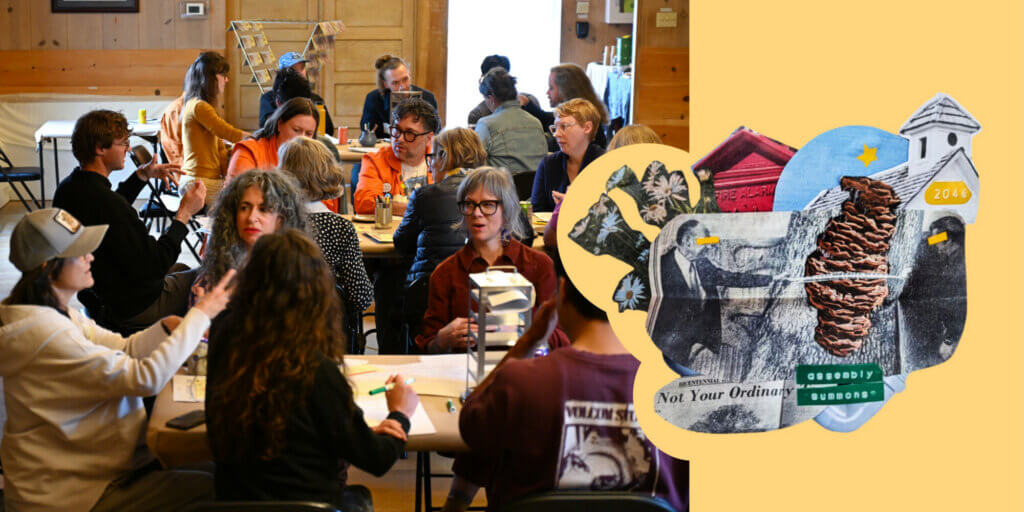
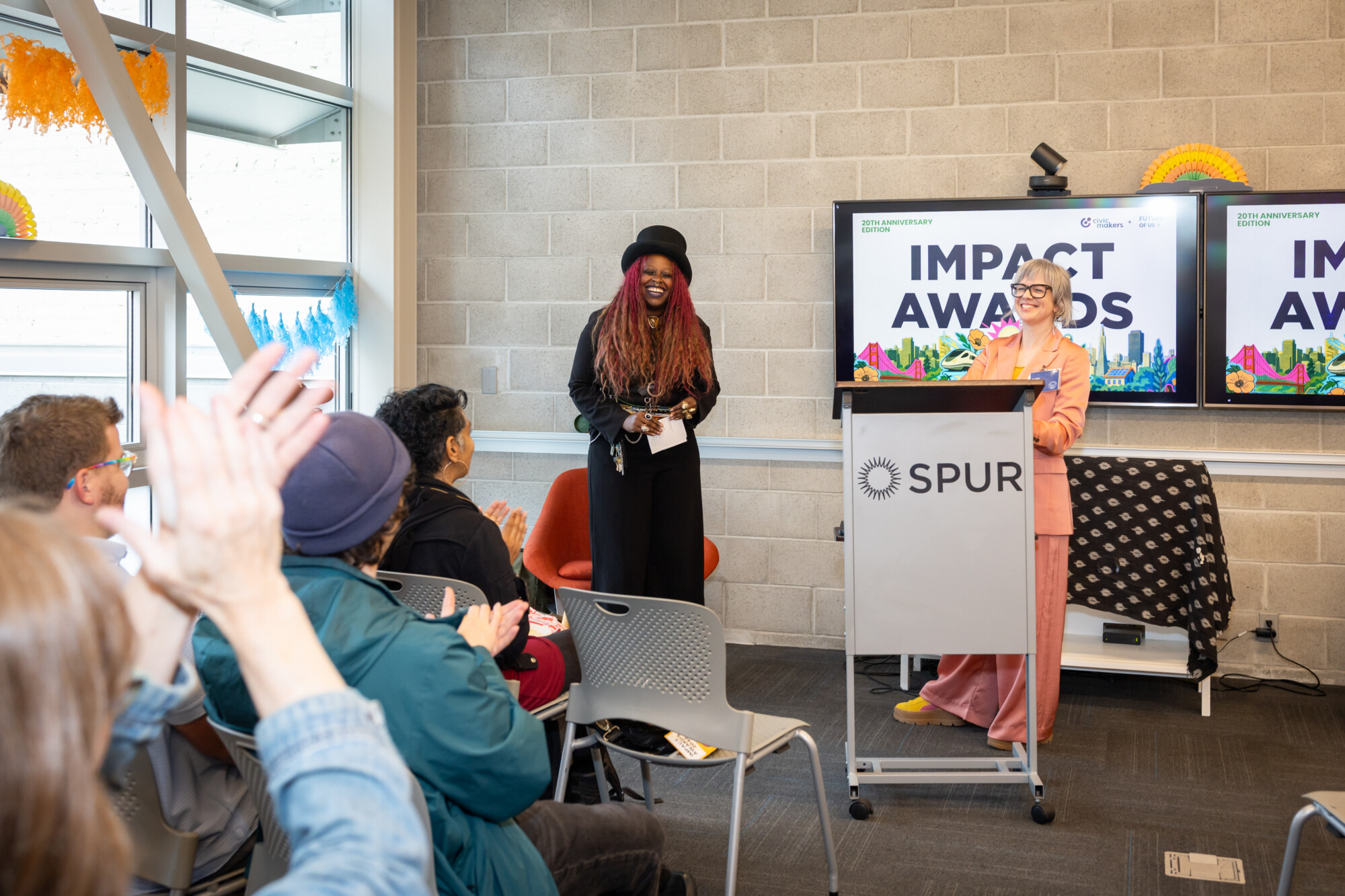
In July, we hosted an awards ceremony…20 years in the future. As part of the official programming for the inaugural Future of Us Festival, the CivicMakers team designed a participatory, experiential awards ceremony set in 2046.
The premise: to imagine a near-future where 20 years of this civic imagination festival resulted in meaningful, positive futures for San Franciscans.
The Process
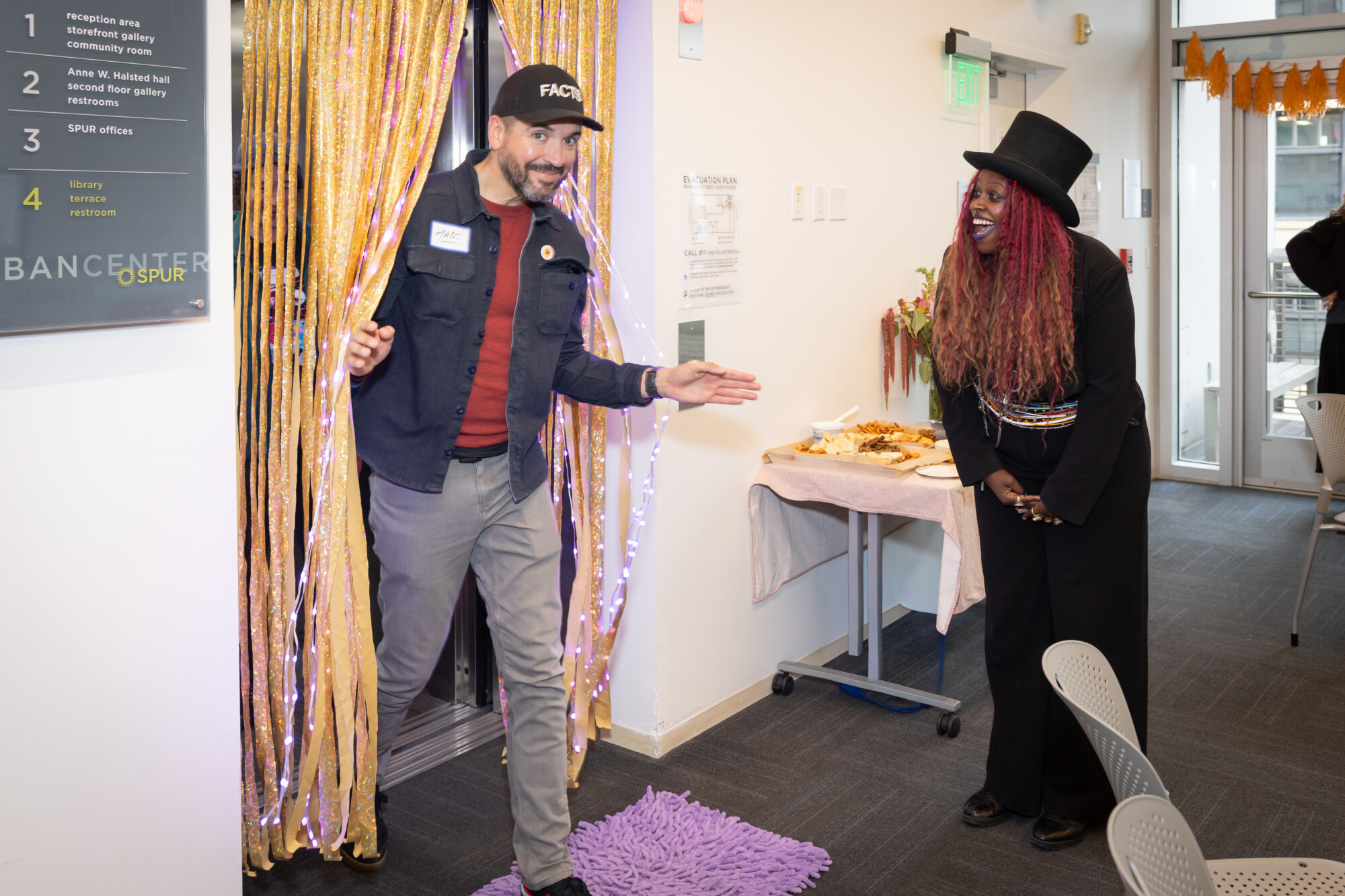
Hosted at SPUR, nearly 40 participants traveled through a time machine that transported them to 2046. There, they were greeted by the Mayor and an awards show host. The award categories were aligned with the themes of the festival, which explored various futures.
To shape these awards (an these futures), we sourced stories and input from festival attendees as well as The Plenary Co.’s data from community listening sessions conducted the prior year.
The Products
Four unsuspecting award winners were given trophies, represented by small plants. This created an element of joyful surprise, with the crowd cheering them on.


Channeling the joyful, creative energy in the room, we then invited participants to co-design their own awards of the future. They invented awards categories like “moral imagination” and “inter-relationship health.” The future projects they created ranged from a citywide fruit forest, to mutual aid, to using fungus to transform toxic waste into nourishment.
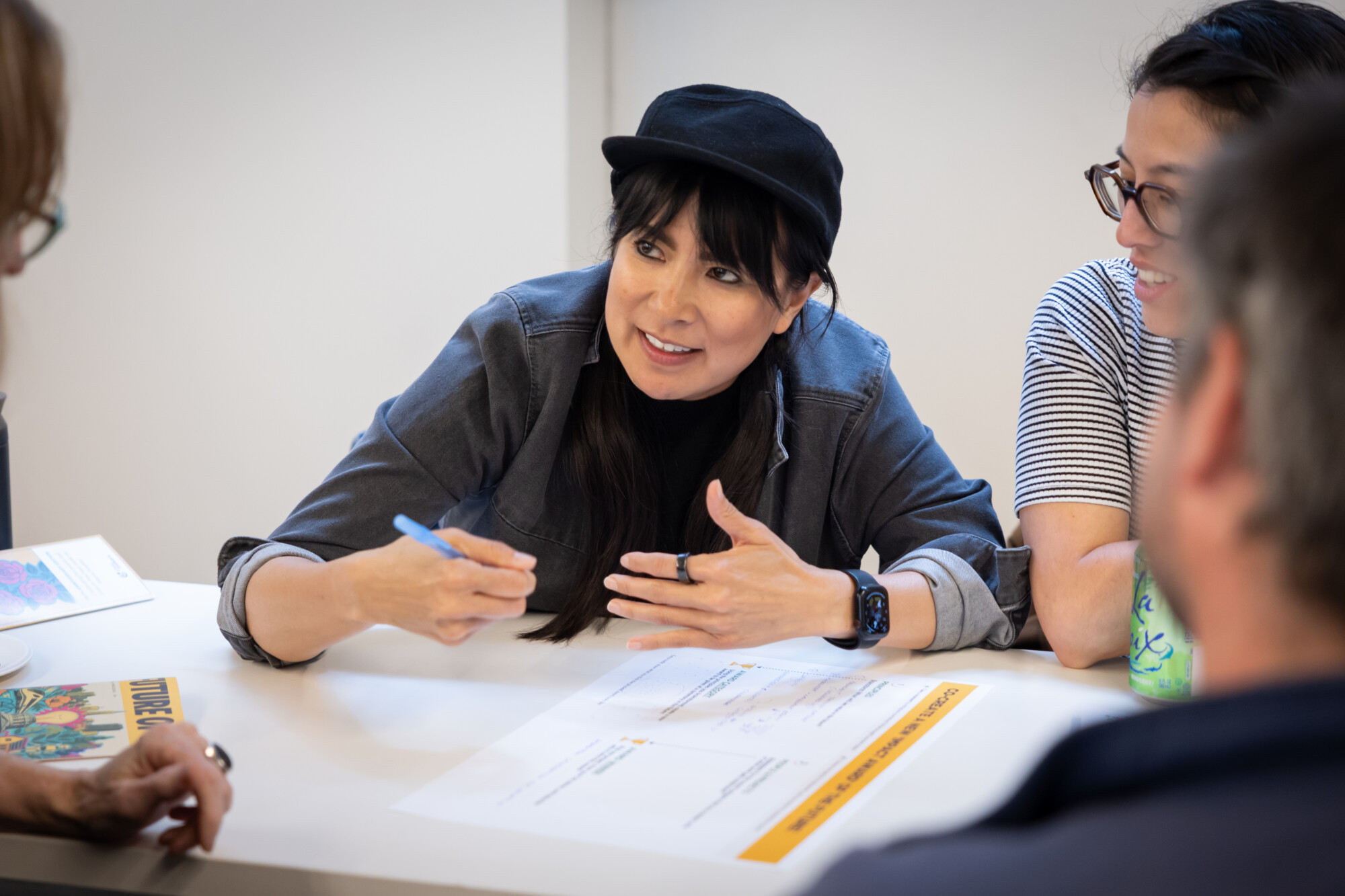
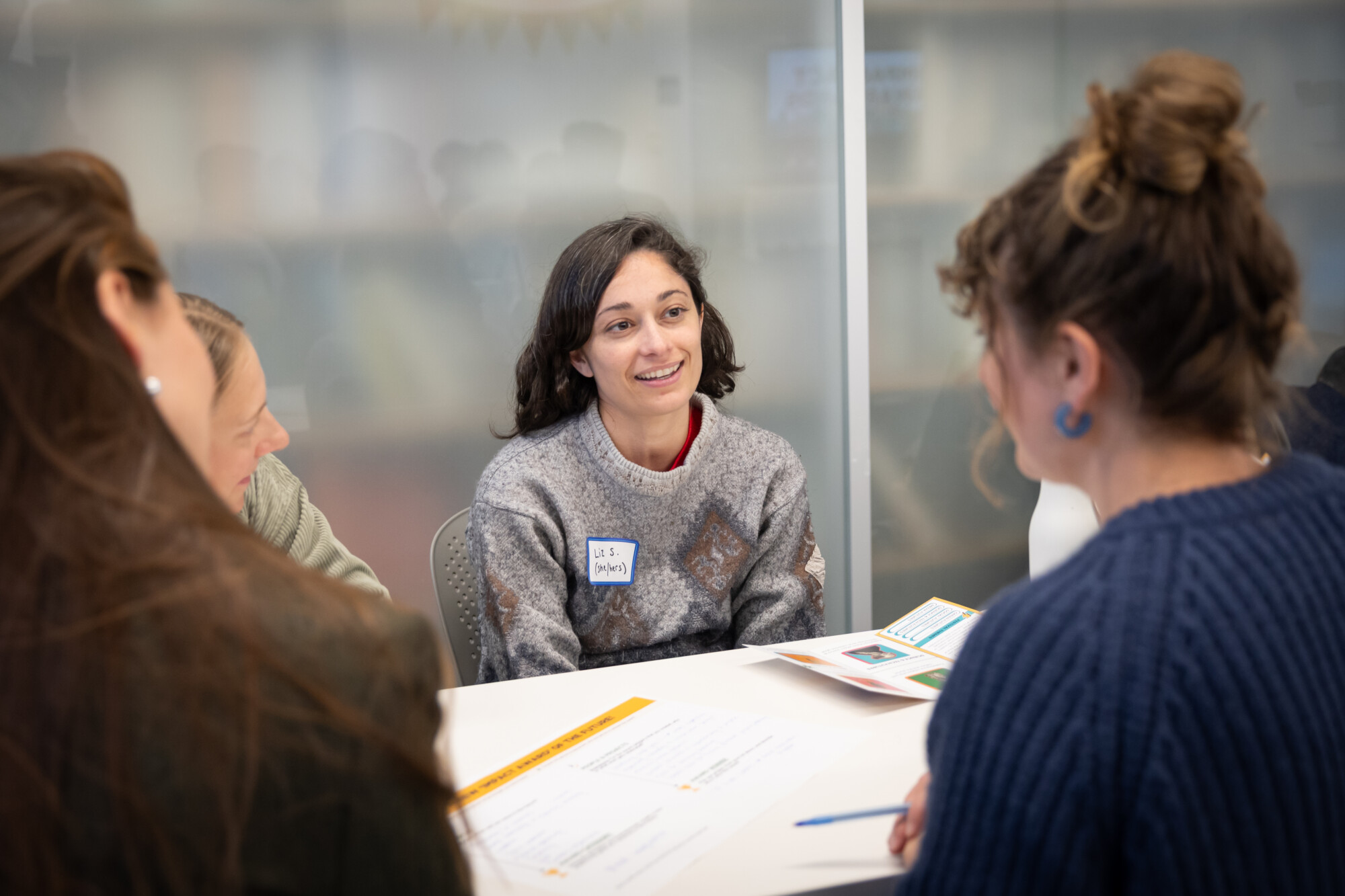
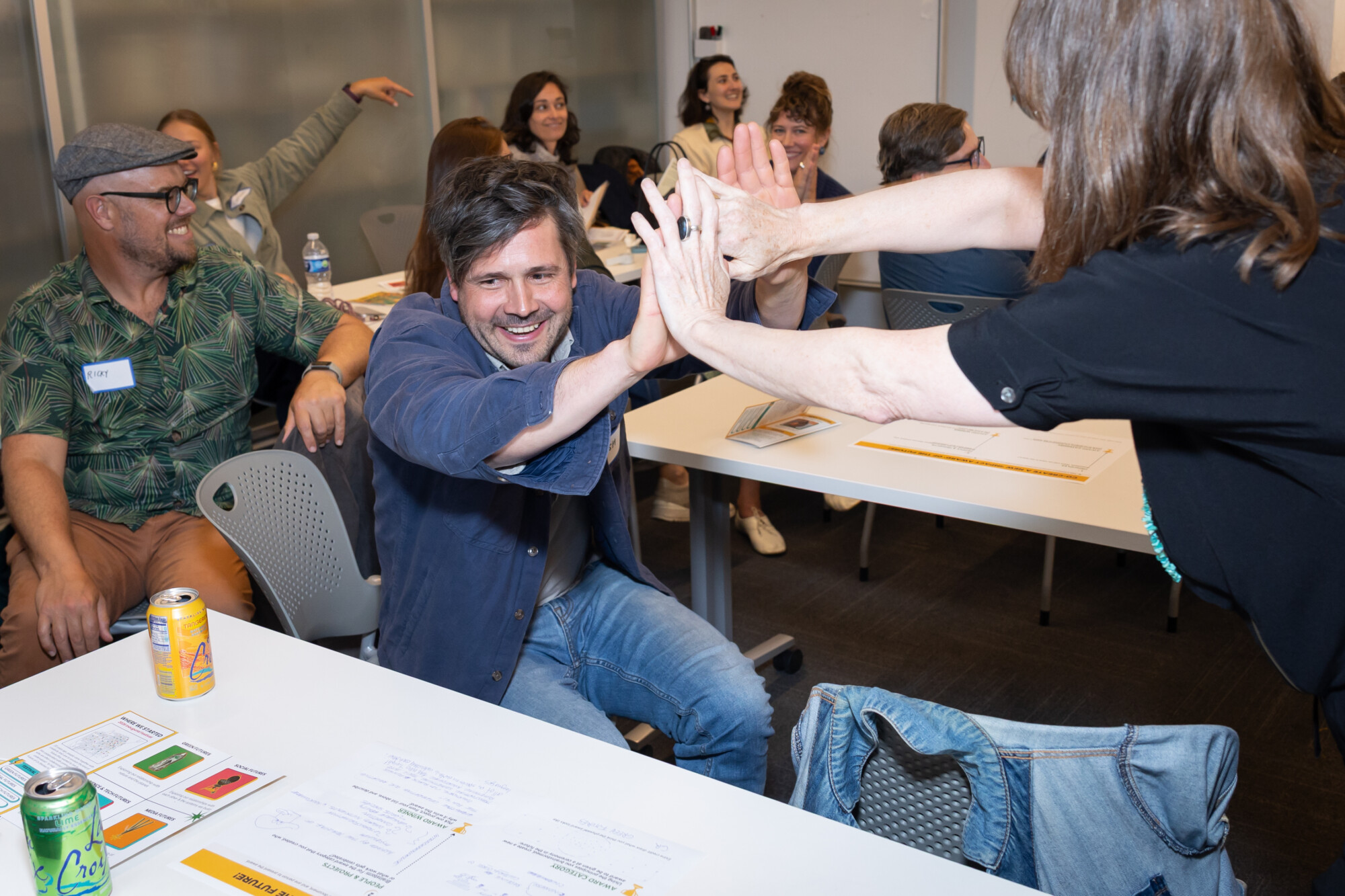
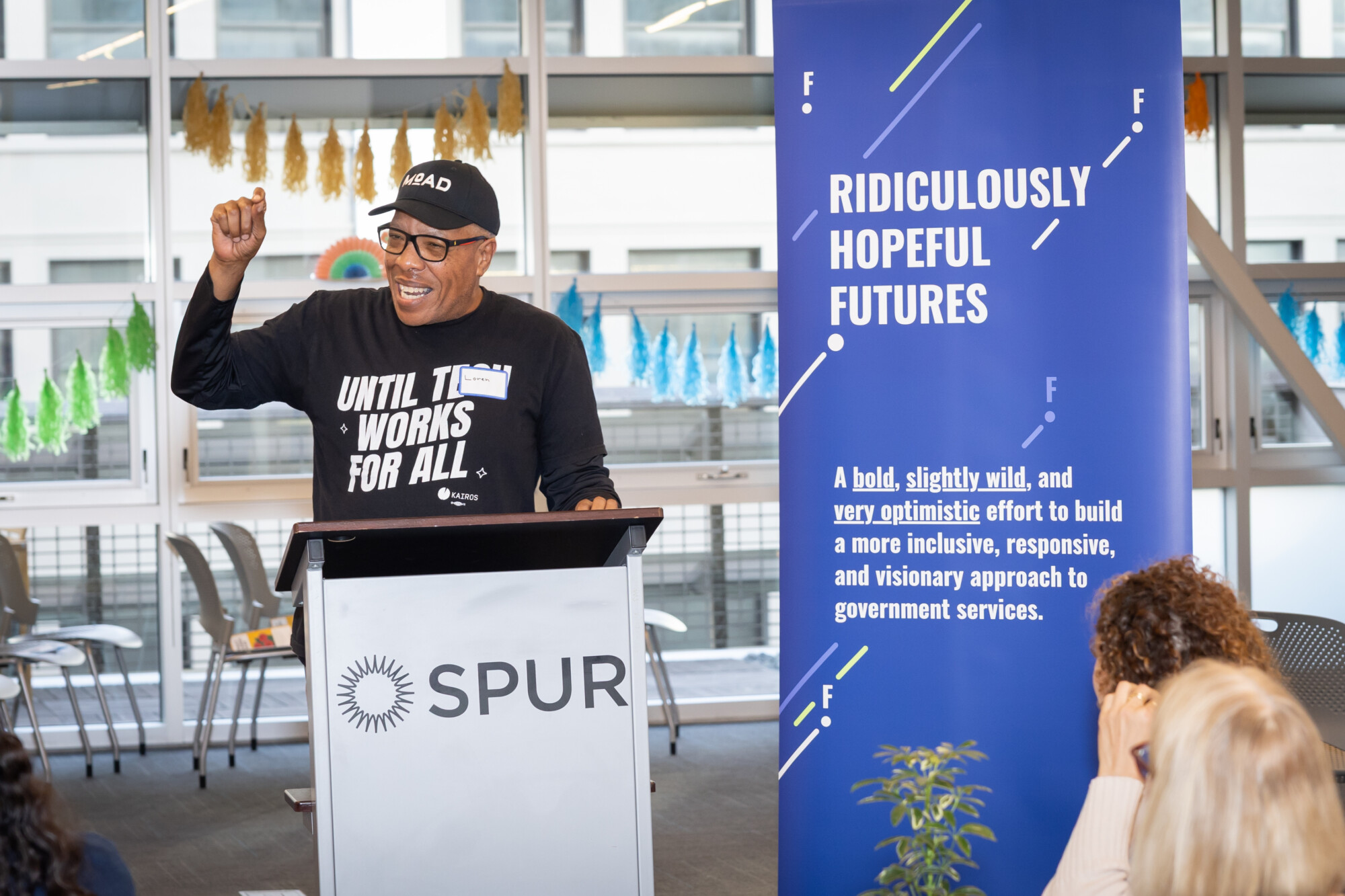
Because the awards ceremony format is both familiar and, typically, an exclusive event, it made for an effective experience to transport people into a place of joy, creativity and collective, regenerative visioning.
Civic Summons: 2046
The concept of imagining a more hopeful future was flourishing at the inaugural Resilient California Summit. The gathering was an opportunity to convene policymakers, climate scientists, foundations, government departments and practitioners working in sustainability and resilience to review California’s Fifth Climate Change Assessment.
Our team led a PXF workshop transporting participants to 2046, when the state would be reporting on its ninth Climate Change Assessment.
The Process
We worked with Suzie McMurty, an artist and design researcher whose Civic Summons: 2046 activation for the Future of Us festival we supported. During the summit, we handed out invitations that look like a jury summons to potential participants. This was another case of using a familiar artifact in a new way to entice folks to join.
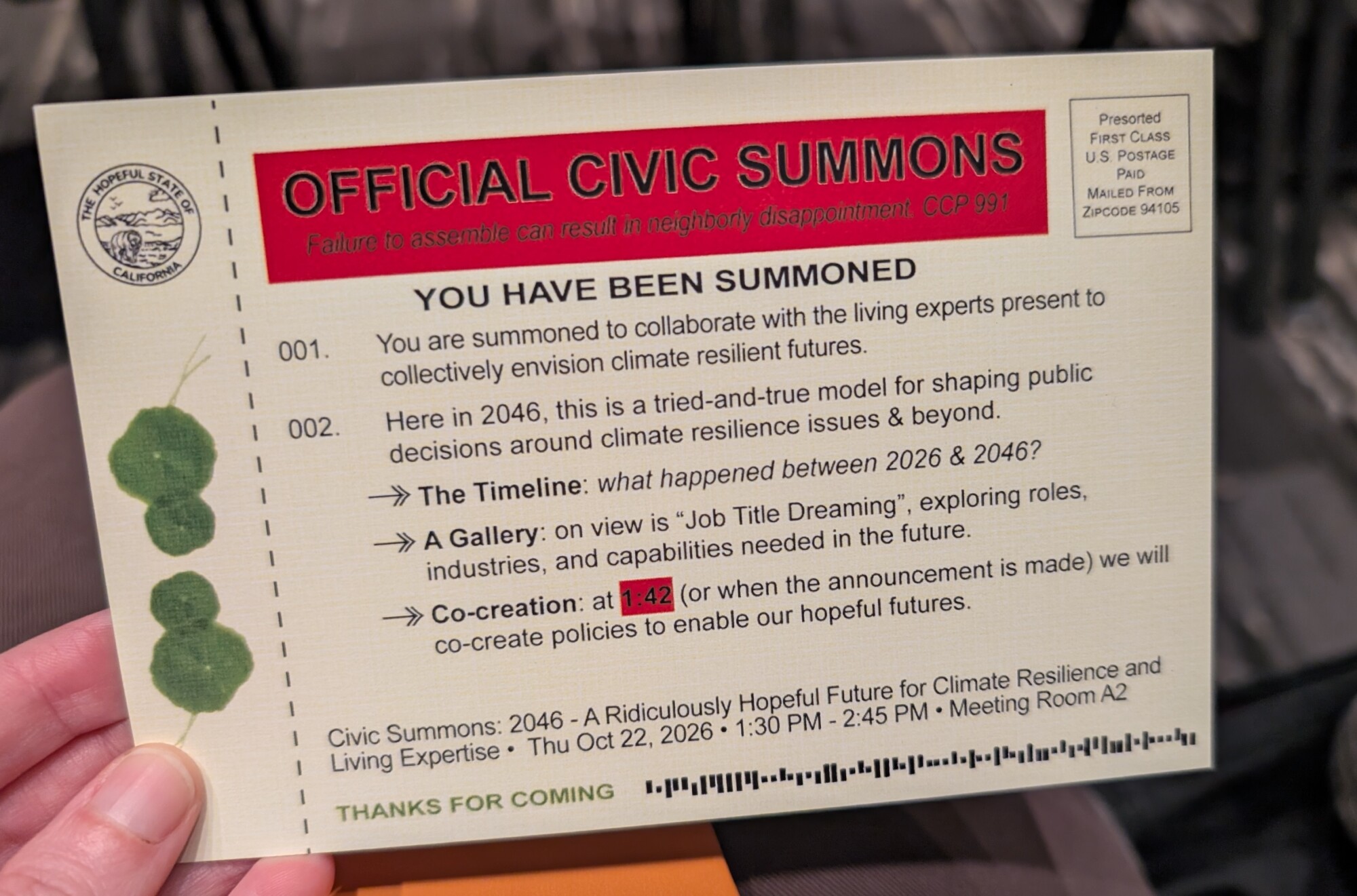
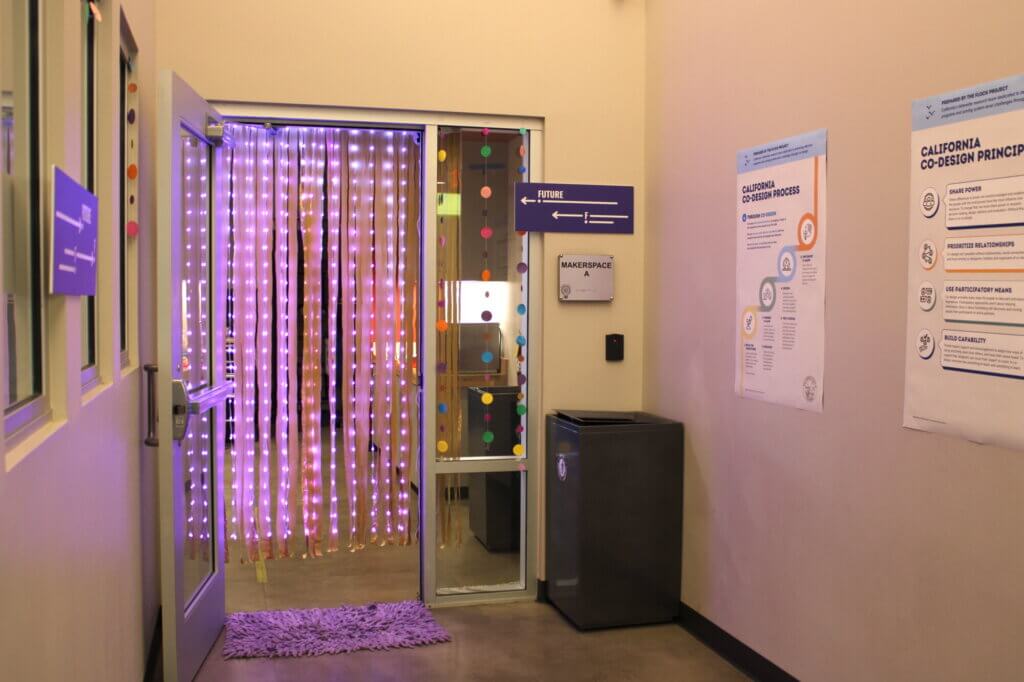
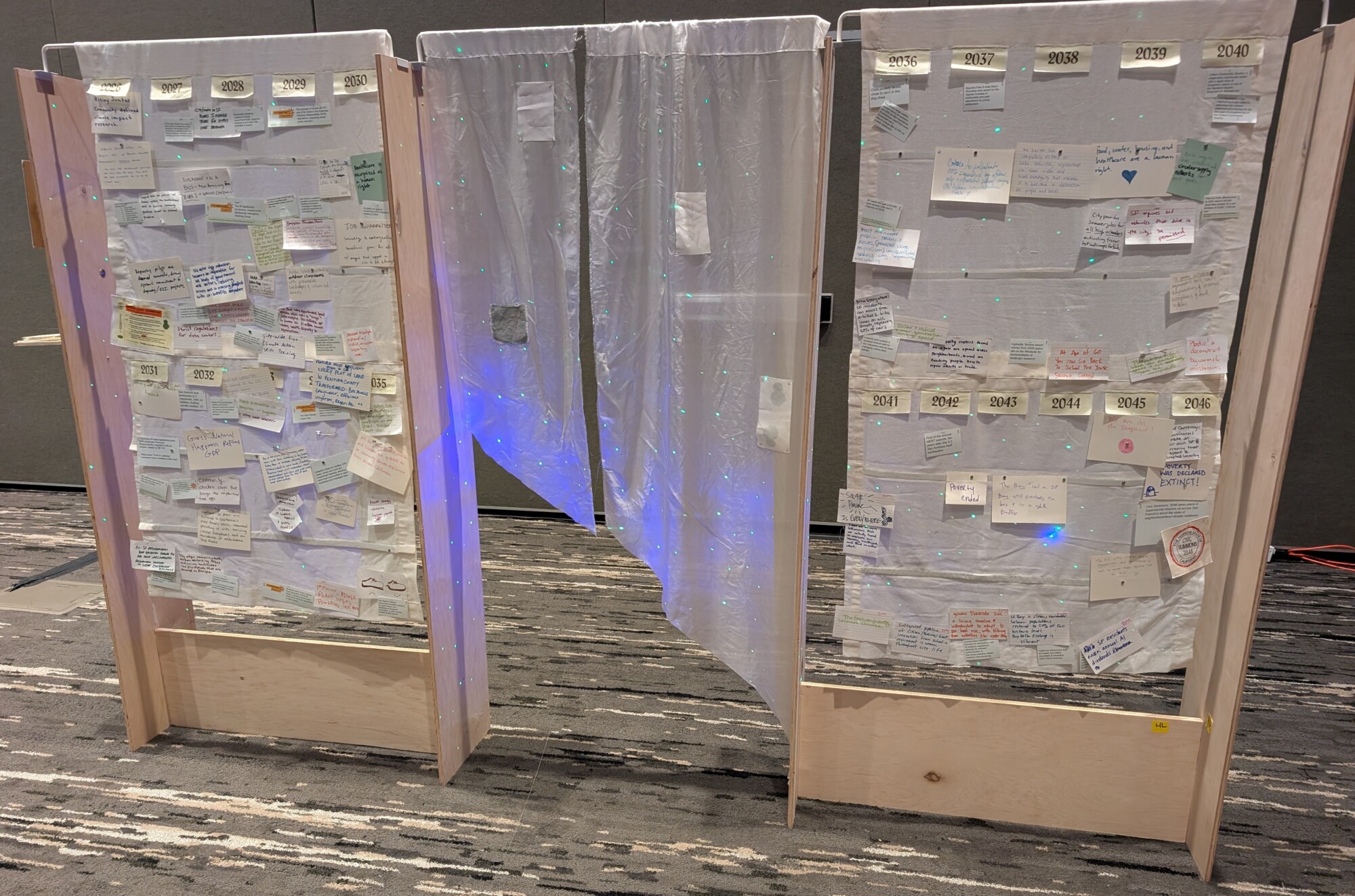
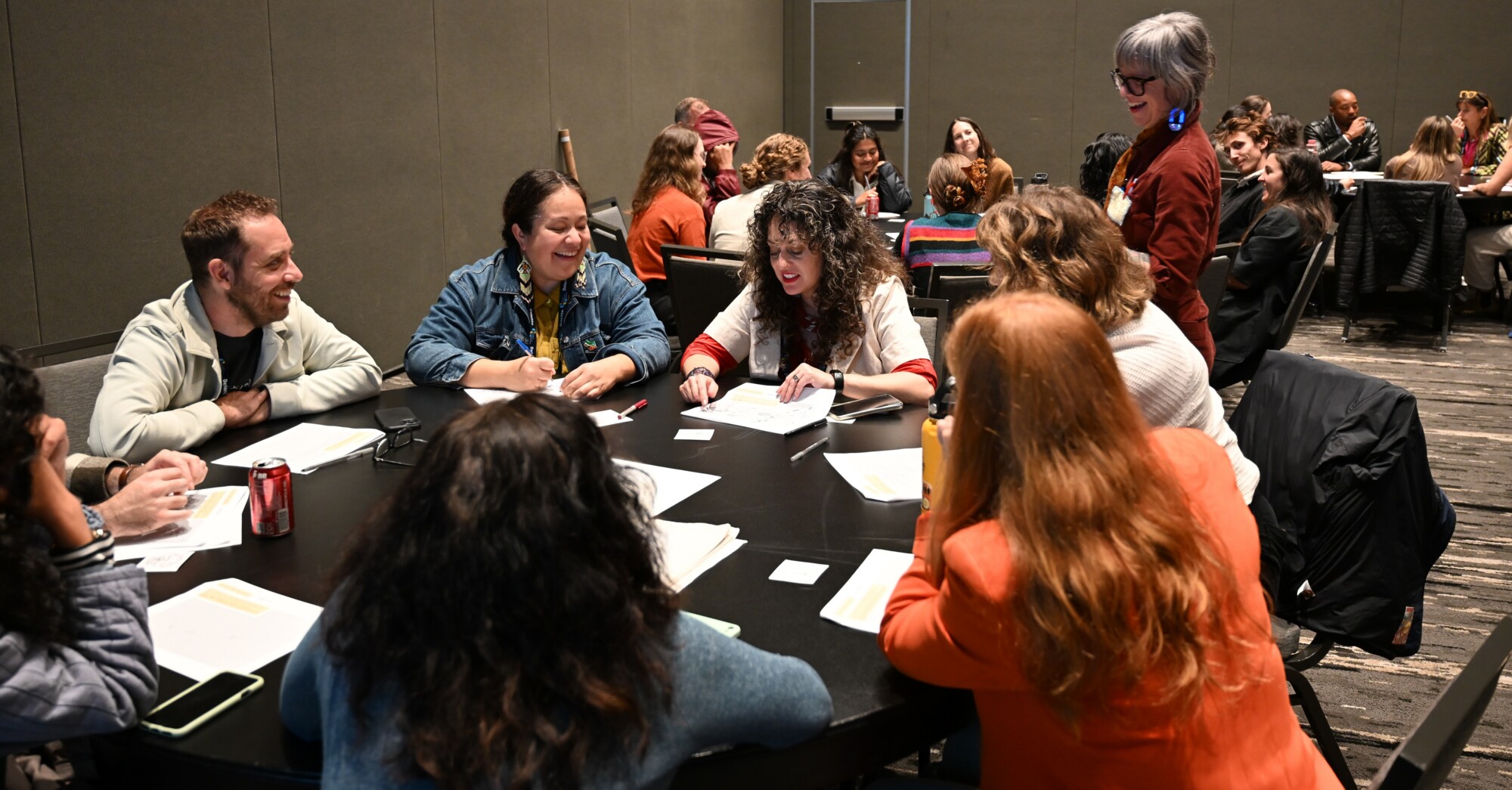
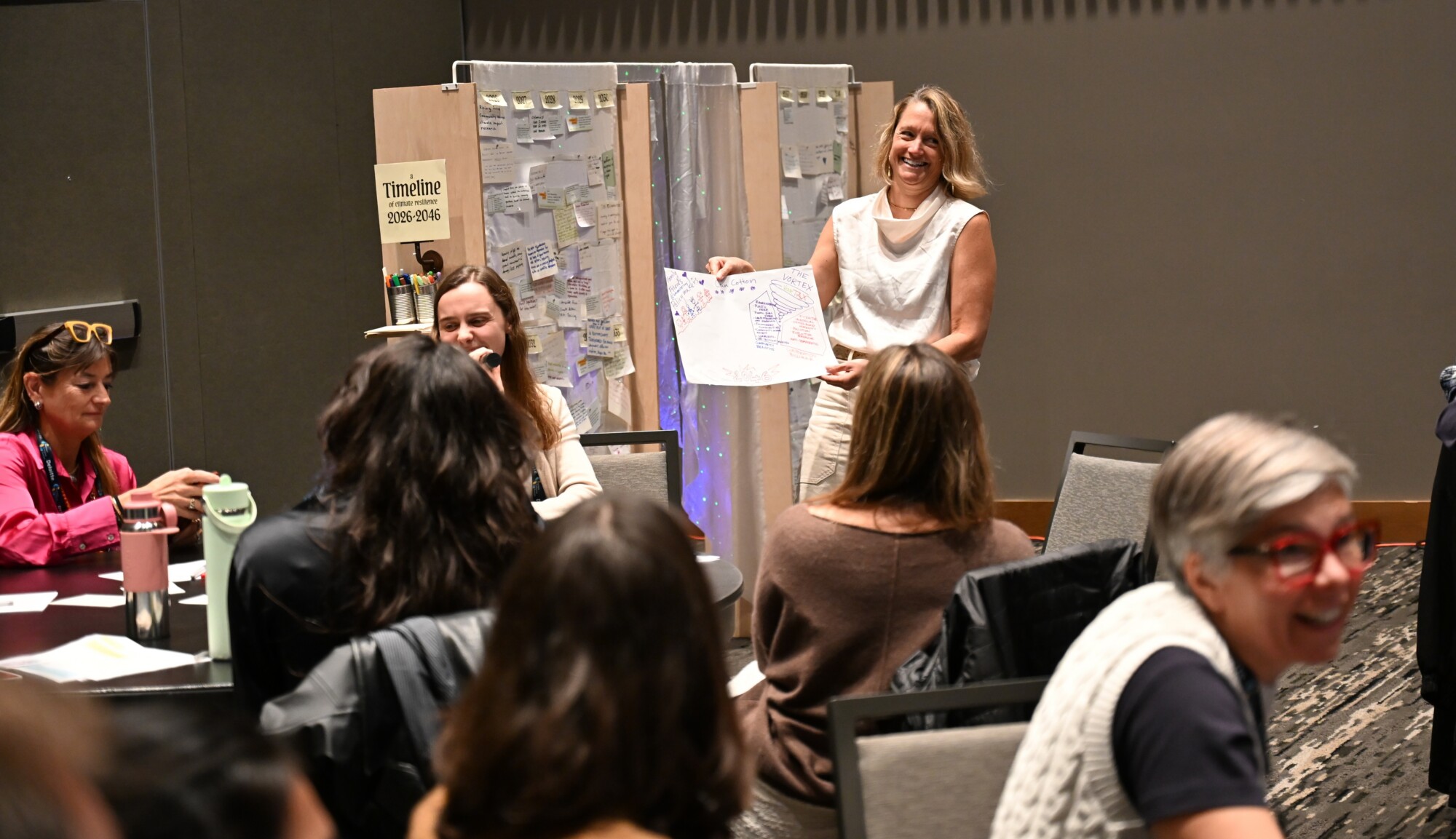
When participants joined, they walked through a portal; a pre-fabricated timeline with an arch and fabric that transported them into 2046. Along the timeline were events that took place over the last 20 years. Participants were invited to add more events under the theme of hopeful climate futures. They were also given the opportunity to imagine future job titles through an interactive exhibit called “Job Title Dreaming” prior to the start of the group-based, creative deliberation, which was the main activity of the session.
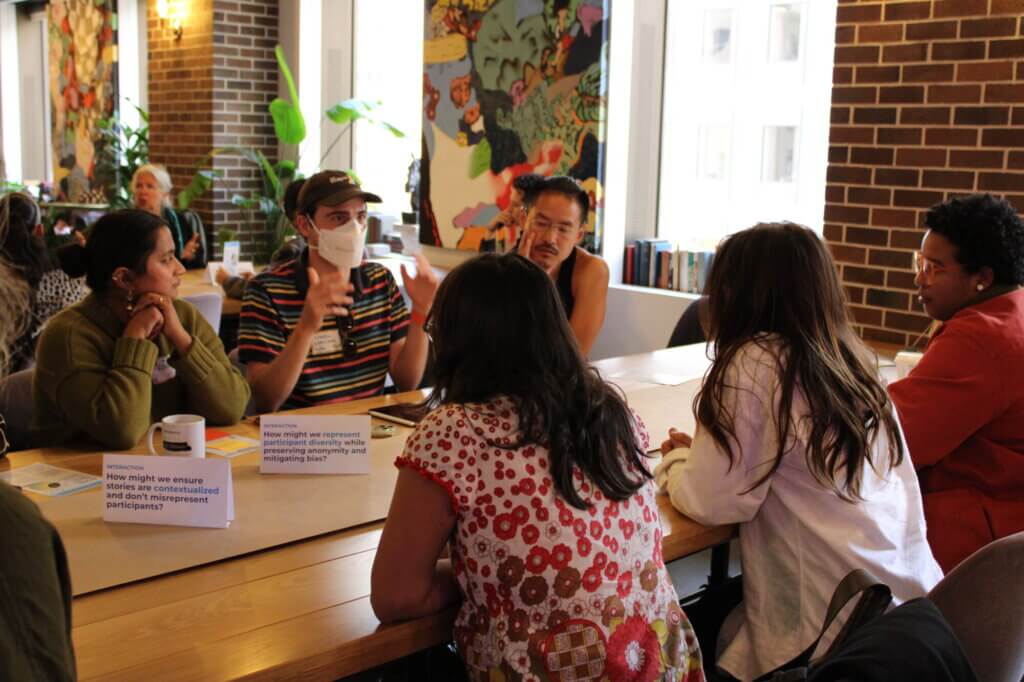
Round tables of participants were then given three different cards from the timeline, representing various events, and were assigned the task of envisioning what sort of policy decisions needed to be made in order to bring those visions to life.
The Products
Some of the events on the timeline that this particular audience added included:
- Lobbying becomes illegal, all projects must go through environmental community review
- Healthcare is recognized as a human right
- Fossil fuel combustion is banned in the LA area
- Public schools normalize outdoor classrooms, with permeable landscapes and urban food forests
- Each region has circular supply networks for most goods
- Poverty is declared extinct
What really stuck with us was how intersecting jobs, healthcare, housing and other human needs were with the notion of climate resilience. Not to mention the sheer amount of joy, laughter, and creativity that was generated in the room.
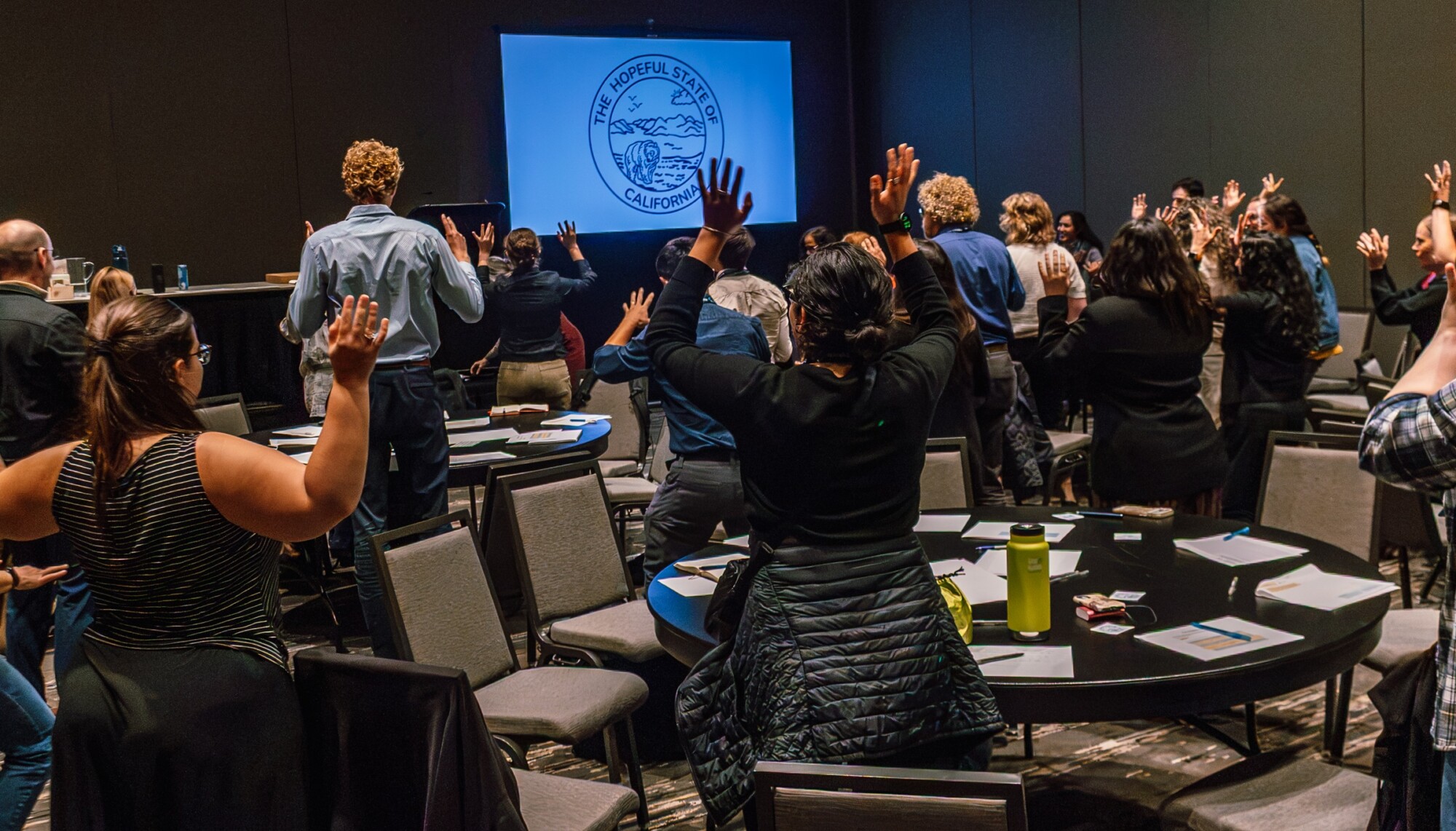
At the end of the co-imagining toward participatory climate policy segment, we invited the audience to perform a “ritual” that brought us back into the present day: standing up, raising their hands, and doing a little shimmy. We have found that incorporating playful elements helps to signal a sense of accomplishment in getting the work done, which is to suspend disbelief for some precious moments in time that allow for us to surface creative ideas outside the constraints of today.
Build Your Future: Cerritos College
Earlier this year, we worked with Cerritos College on some human-centered data storytelling to find the insights behind the numbers for their ERiCA grant (Equal Representation in Construction Apprenticeships). The grant is intended to engage more women and non-binary individuals to imagine a future career in the construction trades.
Through this partnership, we were invited to host a futuring session with high school students at a day-long event in early November called “Build Your Future.”
The day consisted of a series of workshops and panel discussions from women working in the construction trades. Workshops focused on workplace culture, the rights of workers, and wellness tools. There was even a virtual reality (VR) portion where students could wear a VR headset to experience what it would be like to walk a high beam on a skyscraper.

The Process
We attended the full-day Summit and led a session at the end that encouraged students to imagine their life five years into the future. We collected data on what types of workplace cultures, elements of wellness, and worker safety was being advocated for, and created an introduction to the session with statistics around bringing those futures to life.
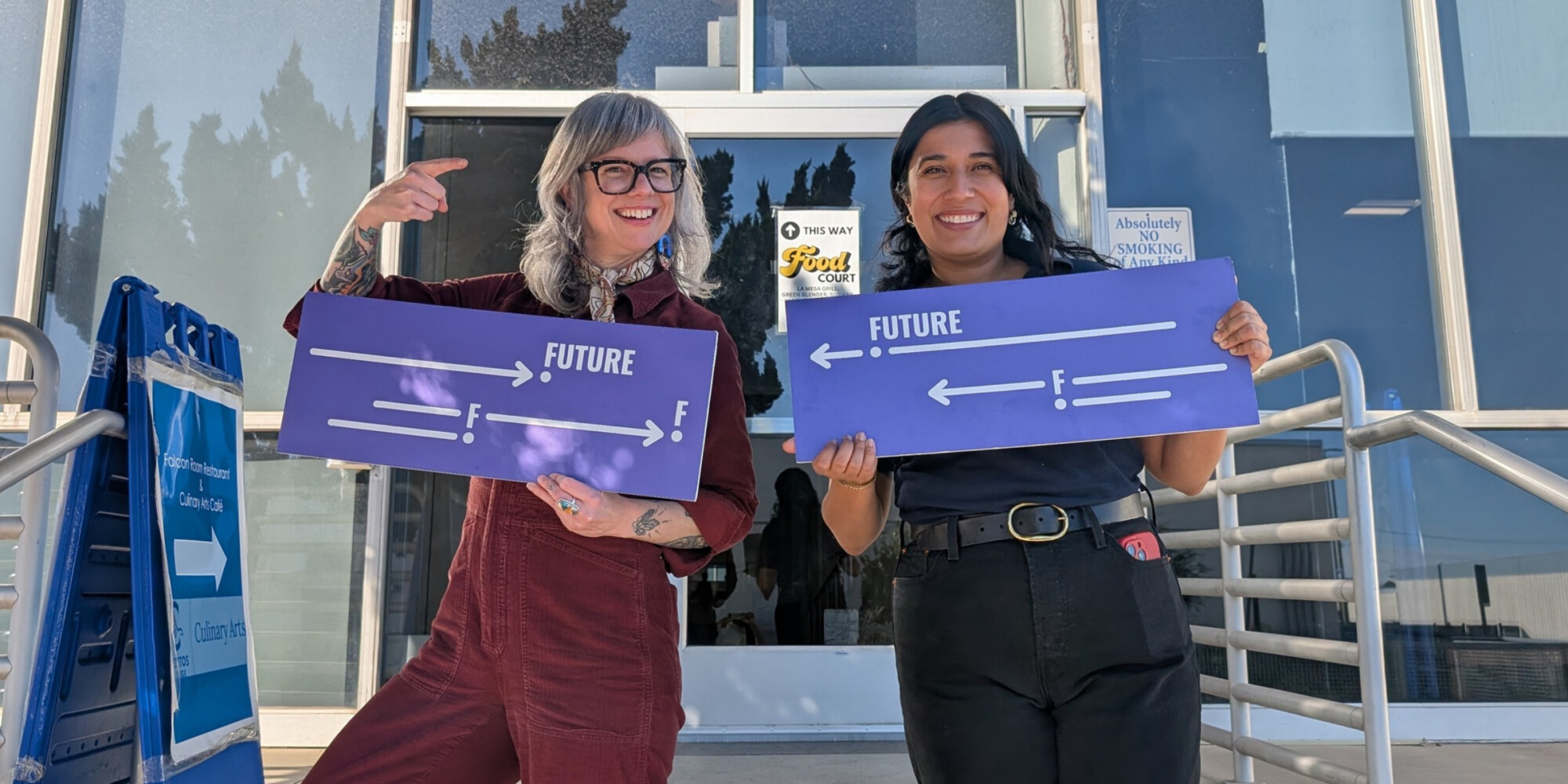
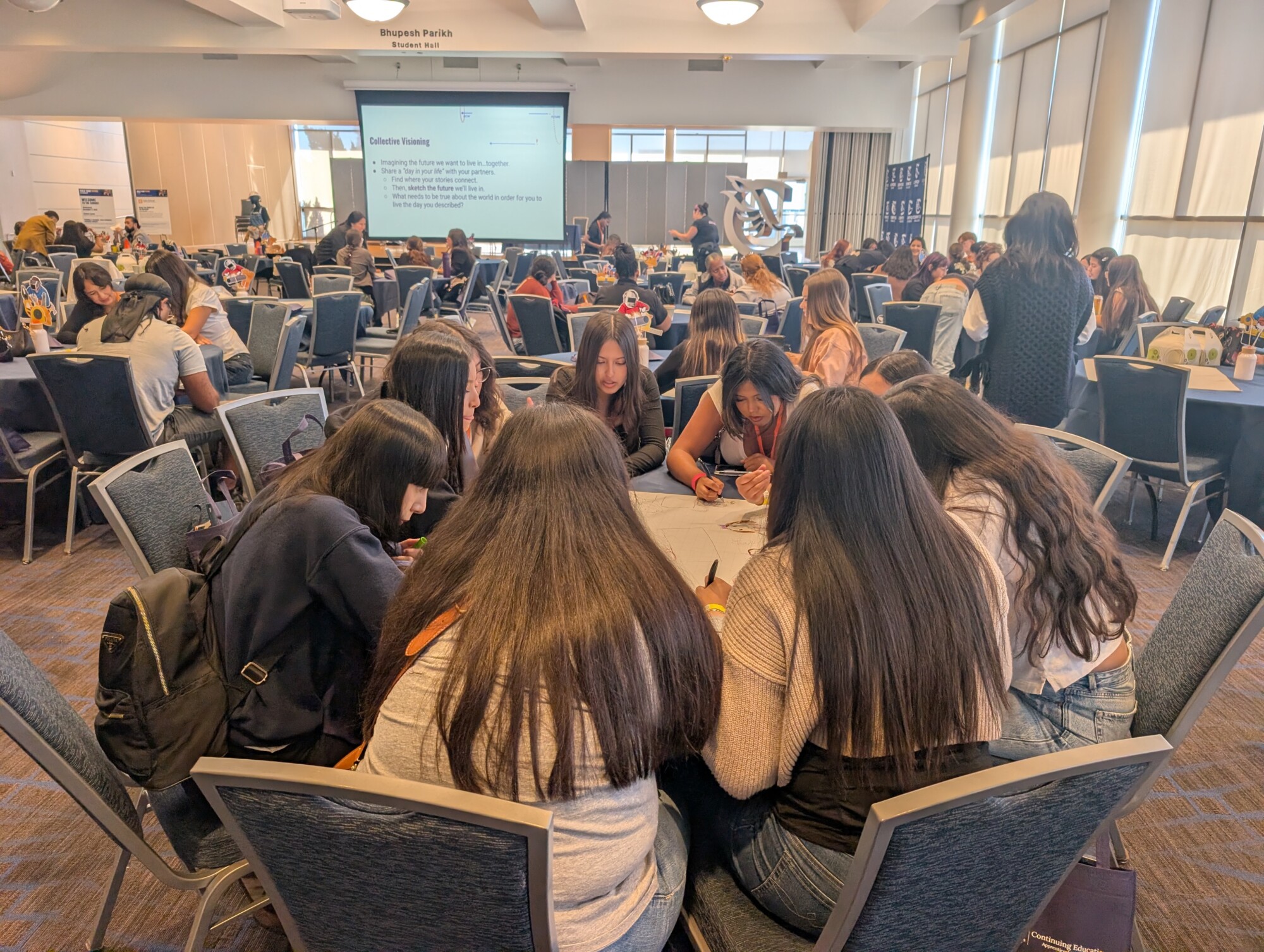
Students were invited to step outside of the building, then they walked back through a “time machine” into the year 2031. After some commentary about what the world looks like in 2031, including reference to high-speed rail and the country’s first Latina president, students were given the task of individually writing what a day-in-their-life looked like. Prompts included what kind of work they were doing, where they were living, who they were with, what they ate for breakfast, etc.
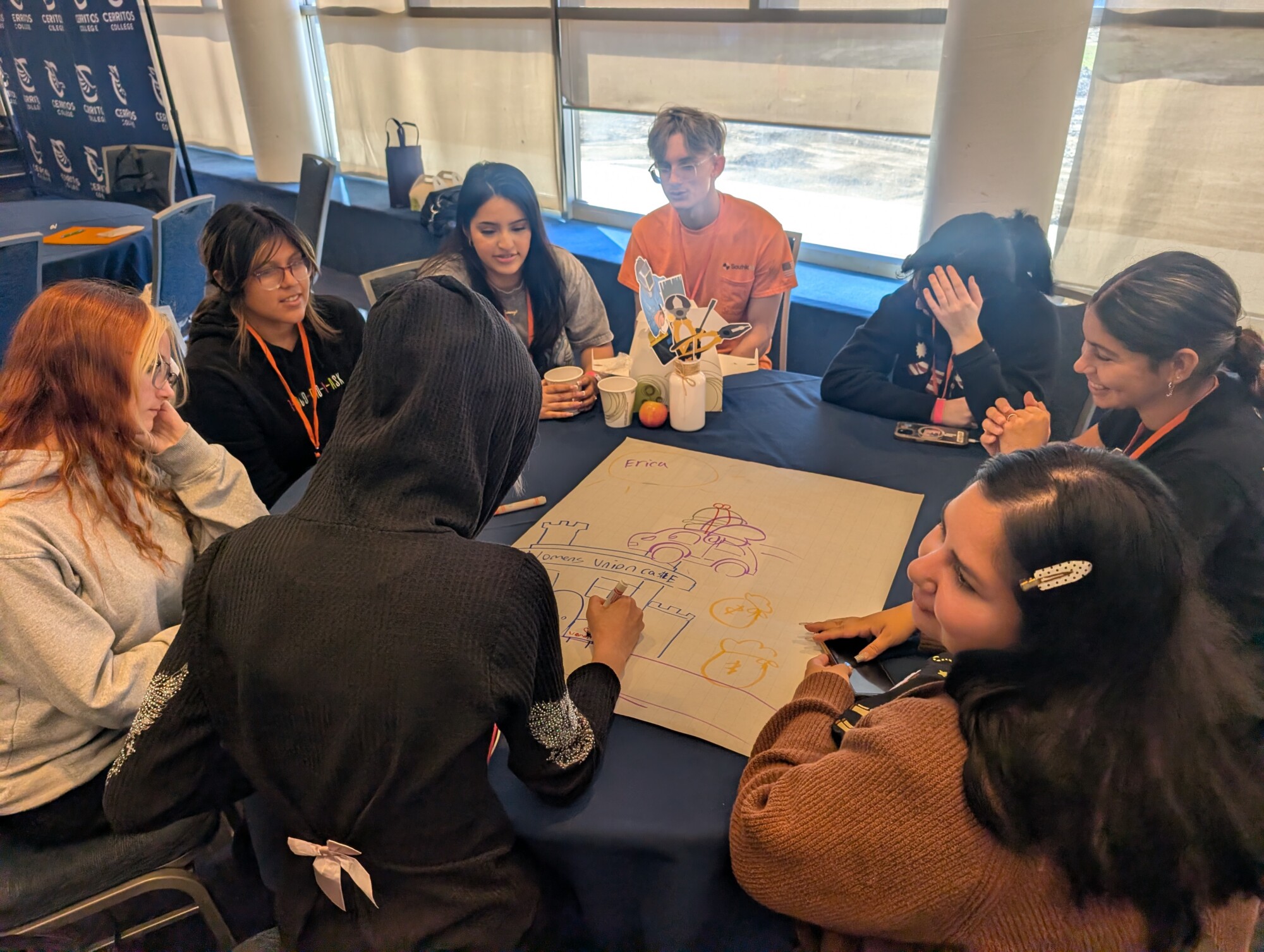
Then, they were given large sheets of paper with grids, meant to evoke blueprints. Here, students mapped where their individual futures intersected with their collective futures.
The Products
Futures the students imagined included being part of construction unions, working with other women, and working on solar projects. Some students imagined what type of pets they would have, and whether they had children, and even some mentioned flying cars.
One of the key aspects of each of the students’ individual and collective futures was economic stability and financial independence.
Luckily, Cerritos College and their thoughtful implementation of the ERiCA grant are working towards exactly that – from the present day, and into the future.
What’s Next
These are three participatory experiential futures formats that we’ve tried and tested. In each context, the environment created allowed participants to dream, play and imagine in ways they may not have been able to without the express invitation to do so.
We’ve learned that transporting people with familiar artifacts – like the jury summons and awards ceremony – grounds the experience in what they know to be true about today, while visualizing what could be better.
If you’d like to bring these methods to your team or organization, we’re here to make your time travel dreams a reality!